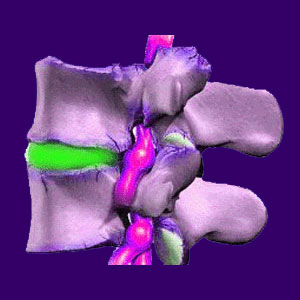
Anterolisthesis is another term for a particular type of spondylolisthesis condition where the misaligned vertebral bone has moved forward in relation to the remaining bones surrounding it. The condition is sometimes used as a stand-alone diagnosis, but is more commonly used when rating forward slippage of the affected vertebrae.
Although spondylolisthesis can be scary looking on diagnostic imaging, statistics clearly show that most mild to moderate cases are completely harmless and asymptomatic. However, at severe levels of vertebral slippage, patients can begin to experience lower back pain, sciatica and even spinal instability, as well as creating posture issues which may require surgical intervention in extreme cases. Advanced vertebral misalignment is one of the more difficult spinal pathologies to successfully treat, even when the diagnostic theory is completely correct.
This treatise examines single or multiple forward vertebral bone migration in the human spinal column.
Anterolisthesis Facts
Spondylolisthesis generally affects the L5 vertebral body, although it can happen virtually anywhere in the spine and is seen often at L4, as well. In the case of this particular type of slipped vertebrae, the affected spinal bone has moved forward, when compared to the vertebral segment below.
There are many reasons why this variety of spondylolisthesis condition may occur, ranging from congenital and idiopathic expressions to scoliosis issues to the results of traumatic injury or even normal spinal aging. No case of front-to-back vertebral displacement is identical to any other.
The most important thing to remember is that unless the condition is severe, the chances of it causing any pain or related neurological symptoms are slim.

Anterospondylolisthesis Rating
Spondylolisthesis is rated on a scale so that the condition can be monitored and evaluated for potential symptomatic expressions. Mild and moderate levels of slippage are generally considered innocent, but should be monitored to be sure that the condition is not worsening over time. This accounts for slippage degrees of less than 25% for mild spondylolisthesis and less than 50% for moderate spondy. Serious slippage is rated at under 75%, while extreme slippage is rated at over 75%.
As these conditions get worse, the chances for symptoms increases exponentially and the worst cases of spondylolisthesis may put the very structure of the spine in great jeopardy. Luckily, these scenarios are very rare. In fact, the vast majority of cases represent slippage degrees of less than 10%.
Anterolisthesis Help
We get many letters from patients who have been told that a minor (sometimes 5% or less) vertebral slippage concern is their primary source of pain. Usually, this diagnosis comes via chiropractor and although I know the facts, I still advise the patients to seek neurological evaluation. Without exception, every single case I have followed has been pronounced innocent of symptoms or neurological effects. This is a very telling statistic. I know there are extreme cases out there, but in these circumstances, I do not think that anyone is questioning the reason for the pain.
The lesson to be learned for the rest of you with minor and moderate vertebral slippage is that your pain may have been blamed on the spondylolisthesis, but that does not make it true. Seek a second opinion and neurological testing to be sure and if cleared, go back and tell that original diagnostician that the were wrong and can not have any more of your money. Better yet, leave them in your past and stick with new doctor.