
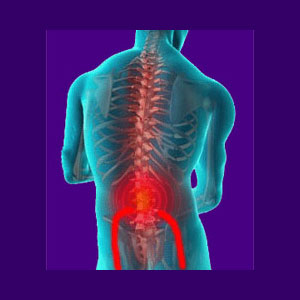
Back and leg pain is one of the most common patient complaints and is also one of the most agonizing. This combination is very difficult for any patient to deal with, since it really cuts down on their mobility and functionality. The processes which often source lower back pain are typically the same which might affect the nerves that control the movement and feeling in our legs.
Pain that develops in the lumbar spine will often radiate downwards to the thighs, knees, calves, ankles or feet. These lower body radicular pain conditions are generally diagnosed as sciatica. However, it is crucial to remember that sciatica is merely a symptom itself, never a causative condition.
This essay details the very common incidence of back and leg symptoms due to a wide range of causations.
Back and Leg Pain from Muscular Injury
The lower back muscles work closely with the buttocks and upper leg muscles. It is common for a muscular injury in the lower back to affect the usage of these muscles, as well.
Back muscle pain can also change a person’s posture and gait. Sometimes this change creates stress in the ankles, knees or feet. This change can cause pain in the affected areas of the legs. Muscular pain can be very severe, but is usually not serious. Most muscular pain will correct itself in a matter of days or weeks.
I can definitely say from personal experience that symptoms in the postural muscles are some of the most painful expressions of any health condition a person might ever face in their lives. There are just no words for the worst cases of postural muscle pain which can make even the strongest and most resilient patient into a hopeless, inconsolable shell of their former selves.

Back and Leg Pain from Nerve Involvement
Pain in the legs and lower back will sometimes be the result of a pinched nerve in the lumbar spinal region. Nerve involvement can create symptoms in both the back and in the areas of the legs served by that affected nerve.
If a motor nerve is involved, there may be muscular weakness or soreness in the legs or feet. If a sensory nerve is compressed, the result can be pain, tingling or numbness. Nerve compression usually takes place in one of the nerve roots that eventually join to form the sciatic nerve. The following conditions are all associated with leg and lower back pain due to nerve involvement:
Sciatica should never be a diagnosis, since it does not describe a causative process at work to explain symptoms.
Piriformis syndrome is a muscular induced compression of the sciatic nerve deep within the buttocks anatomy.
Spinal stenosis can cause single or multiple nerve roots, or the entire spinal cord, to suffer compression that can create all manner of lower body expressions.
Herniated discs can bulge into nerve tissues, possibly creating specific locations of pain and functional impairment in the legs or back.
Spondylolisthesis can misalign the neuroforaminal openings, creating pinched nerves in the affected spinal level.
Back muscle spasm can compress nerve tissues outside of the immediate spinal anatomy.
Facet joint syndrome sometimes involves nerve compression enacted by bone spurs that develop in hypertrophic joints.
Arthritis in the spine facilitates many spinal changes that can lead to stenotic formations and nerve impingement.

Sciatic Nerve Pain
I have dealt with this killer combination of suffering for decades already. My lower back pain always made my legs hurt and it still does. Sometimes, the pain would burn and radiate down both legs. Other times, my ankles throbbed. I had a series of knee injuries in martial arts training that I believe came about from poor posture in training. This posture change was definitely a result of my chronic back pain.
There have been years at a time during my back pain experience, when my upper and outer thighs hurt 24/7. Sitting, standing, walking or sleeping made no difference to the pain. It simply continued around the clock. Now, the sciatica seems worse when lying down. Maybe it is just the ferocity of all my other symptoms which has taken my mind off it to a large degree.
Back and leg conditions can be a real trial. Proper diagnosis of the root cause is the best hope for successful treatment. Make sure to inform your care provider of any changes in your normal back pain. Symptoms that spread to the legs, or change often in the legs, should be reported to your physician and should always be subjected to neurological evaluation.
Remember that ischemia is often the underlying source of lower body pain and discomfort. If your pain has defied treatment, I urge you to add this oxygen deprivation process to your list of considerations as a possible causation of your back and leg pain agony.