
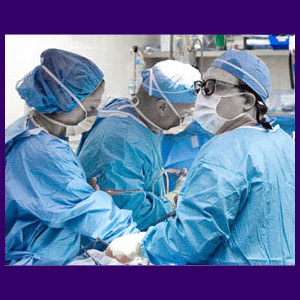
Back surgery complications are always a risk when undergoing any invasive therapy procedure. The fact that back surgery typically occurs so close to the actual spinal cord makes it a very delicate undertaking. One false move by the surgeon can cause lifelong nerve damage or even paralysis. There are also many other extremely delicate and vital types of tissues in the spine, including major blood vessels and a huge network of neurological tissues. Trauma to any of these can also enact dire consequences for the patient.
The risks of back surgery should always be considered carefully before making the decision to have a spinal operation. Unfortunately, we find that some doctors do not spend adequate time or effort discussing these potential downfalls with the patient. Therefore, we are advising all of you to research the risks for yourself and then be sure to bring these factors up in conversation with your surgeon prior to undergoing the procedure.
Back Surgery Complications from Local Anesthesia
More and more, back surgeries are being performed under local anesthetic. This means that the patient is awake during the entire procedure. This is a very good thing and a step in the right direction away from more serious risks. Local anesthetic has a much lower risk factor than general anesthetic. Local anesthetic also allows surgeries to be done very close to the spinal cord with less risk of paralysis. The surgeon can actually ask the patient to move their feet during certain procedures, to make sure everything is still ok.
Whenever possible, elect to undergo sedation and local anesthesia rather than suffer the increased risk of being put to sleep under general anesthesia. As an added bonus, most patients feel much better after receiving local anesthetic, compared to general. This is because local anesthetic does not cause the extreme nausea that is commonly suffered by patients who are put under general sedation.

General Anesthetic Risks
General anesthetic means that the patient is asleep during the surgery. Some people have an allergic reaction to some anesthetics. In rare occurrences, a patient can go into anaphylactic shock and actually die.
General anesthetic can cause problems with the lungs. It can lead to infections of the pulmonary system, and in rare cases, even pneumonia.
General anesthetic heightens the risk of a heart attack, stroke or embolism, for those at risk for these serious conditions.
General anesthesia is particularly risky for the elderly and those who are obese, as well as those patients who suffer from some pre-existing health issues.
Hypertension also presents an elevated risk for those undergoing a procedure under general anesthetic.
Infectious Back Surgery Complications
Back surgery infection is a risk with any invasive procedure. The infection can be in the skin or any of the deeper levels of the surgical wound.
Any procedure that uses bone grafts from a cadaver, or hardware to reinforce a fusion, will have a greater chance of infection.
Operations which place prosthetics, such as artificial discs or disc spacers, also present elevated risks for bacterial contamination.
If an infection enters the spinal canal, the blood stream or the internal organs, the patient could get sick enough to actually die.
Back Surgery Complications from Spinal Fluid Leaks
During any procedure that is performed near the spinal cord, a dural tear is possible. This is when the membrane surrounding the spinal cord is ruptured. This membrane will leak spinal fluid if it is punctured.
Many spinal fluid leaks are noticed and corrected during the actual surgical procedure. Some go unnoticed, but correct themselves. Others may cause serious effects and need to be corrected during a subsequent second surgery.
If a spinal fluid leak continues, there is a heightened risk of headaches, fluid infection or spinal meningitis. In some instances, CSF leaks can cause ongoing pain and functional concerns.
Surgical Complications / Nerve Damage
Spinal nerves are extremely sensitive. One or more can be damaged during any back surgery procedure. The result can be decreased nerve signal to an area of the body served by the damaged nerve. This can affect movement or sensation.
In rare cases of autonomic nerve injury, the heart or lungs might be affected. In extreme cases of autonomic nerve injury, the patient can die.
Nerve damage is often cited as one of the major cause of failed back surgery syndrome and may be impossible to fix.
Back Surgery Complications / Paralysis
If a spinal cord injury or infection is caused by an operation, the patient might become paralyzed. These circumstances are rare, but the risk is still there, especially with procedures that work close to the actual spinal cord.
Partial or complete regional paralysis may occur in areas of the body if spinal nerves are damaged beyond repair.
Back Surgery Complications / Blood Loss
There is always the chance of unexpected bleeding during surgery. In a frontal (anterior) incision, there are many major blood vessels that have to be moved to reach the spine. In an incision through the back (posterior), there are less large blood vessels to deal with.
Some surgeries might require a lot of blood loss as a normal part of the procedure. Surgery to correct scoliosis is a good example of this type of procedure. If bleeding continues after the surgery is finished, the patient will feel weak. If the blood loss does not correct itself, a second surgery might be necessary to seal the leak.
Large volumes of blood loss might require treatment with transfusions. Patients who receive transfusions demonstrate elevated risks for blood plasma rejection, infection and even contamination with a potentially dire health issue, like HIV.

Spinal Surgery Complications / Blood Clots
There is an increased risk of developing blood clots with any surgical procedure. The body is fighting the surgery, since it sees it as a wound. The clotting mechanism in the blood is running at full power. This is important to prevent blood loss during the procedure.
Unfortunately, this can also cause clots where there is no need. Commonly, this occurs in the lower legs, since the blood is far away from the heart. If a clot forms, there is always the chance of it causing painful symptoms in the lower leg. There is also the chance that the clot might break loose and travel to the lung or heart. These types of embolisms can create fatal situations.
Spinal Fusion Concerns
A spinal fusion might not bond well at the operated levels. If the bones do not fuse together, then the operation must be repeated. If hardware (screws, cages, pins) is used to secure a fusion, the bones will have a better chance to grow together. However, sometimes the hardware itself can cause a problem by moving, slipping or breaking. Hardware also increases the risk for rejection or infection. In these cases, a second surgery will be done to correct the problem.
A great number of fusion patients suffer complications; far more than all other procedures in the back surgery sector.
Unsuccessful Operations
A procedure might go well, but not achieve the desired result. Sometimes, the patient still has pain. Occasionally, the pain is even worse after surgery. This is often due to misdiagnosis of the actual condition causing the pain.
Failed back surgery syndrome is the name of the condition which affects millions of unfortunate patients whose pain is actually worse after their spinal surgeries. Statistics are poor for long-term curative benefits to be provided for virtually all procedures and treated conditions. Only a minority of patients enjoy relief lasting 7 years or more.
Back Surgery Complications / Scar Tissue
Scar tissue from back surgery is also a possible consequence often implicated in causing continuous pain after the procedure. This is no surprise, since an operation is a terrible injury for the body to bear and scarring is a normal process for healing wounds. Scars can form in fascia, muscles, ligaments, bone and nerve tissue. Nerve scarring is particularly often blamed for causing ongoing pain concerns.

Many patients are told they have scar tissue simply because the procedure failed and the surgeon frankly does not want to be bothered with their calls anymore. I see this quite often and it sickens me to the core.
Back Surgery Complications Summary
Please, consider surgery as a last resort. If you get a recommendation for surgery from a orthopedic surgeon, don’t be surprised. He or she is a surgeon. Operate is what they do.
Back surgery complications can be the unfortunate result of any spinal procedure. Spinal surgery is a great medical tool when it is appropriate. Unfortunately, it is often overused or prematurely used, and can cause permanent side effects which can last a lifetime.
Remember, there is no such thing as a risk-free operation. All are dangerous and all may cause serious health effects, even when they are downplayed as being minimally invasive. Do not take chances. Understand the risks ahead of the procedure and make your decision to proceed with surgery very cautiously.