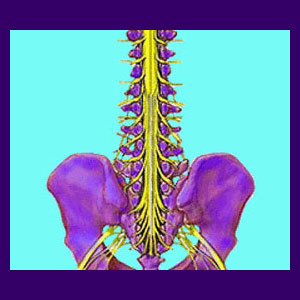
Cauda equina syndrome, sometimes abbreviated as CES, is a serious neurological condition that affects the lower lumbar spinal nerve roots. The actual spinal cord ends in the lower thoracic or upper lumbar spine. After this point, the various spinal nerves branch off, forming the cauda equina, also known as the horse’s tail. These spinal nerve roots serve the neurological needs of the pelvis and the lower limbs. Sometimes, due to an injury, these nerve roots are compressed. If this compression is serious, it can affect the bladder, bowel or sexual functions.
This neurological compression condition is considered a medical emergency, since damage to these nerves may be permanent. Even if treatment is rendered immediately, the function of these organs may still suffer some lasting effects.
This article explains the feared lower spinal disorder called CES.
Causes of Cauda Equina Syndrome
An injury to the lower spinal nerve roots can be caused by any type of severe trauma, infection, or tumor. Neurological injury can also occur over time due to spinal aging and the structural changes associated with vertebral degeneration.
One of the most common causes is from a herniated disc that compresses the spinal nerves.
Auto accidents and falls are the 2 biggest reasons for acute cauda equina syndrome to occur. In cases of trauma, the expression may come on very suddenly.
In cases of central spinal stenosis due to arthritic change, spinal curvature or vertebral misalignment, symptoms may be progressive and gradually build to reach an eventual terrible degree.

Symptoms of Cauda Equina Syndrome
Symptoms of CES may be experienced immediately or may evolve and worsen over time. Severe lower back pain and sciatica typically begin the condition. Patients may not be able to stand or walk well or at all.
Bladder or bowel problems are usual indicators of CES. Symptoms may include the inability to prevent eliminating waste (incontinence), or the inability to eliminate at all (constipation).
Numbness in the legs, buttocks, anus, or sexual organs is another warning sign of CES. This symptom can be expressed as a condition known as saddle paresthesia affecting the inner thighs, buttocks and perineal region.
Diagnosis of Cauda Equina Syndrome
Diagnosis of CES is made using a comprehensive physical and neurological exam. Muscle and neurological tests will be performed. X-rays might be ordered. If there is suspicion of cauda equina compression, then a spine MRI or CT scan will be the usual process of confirmation.
Often, a cervical spinal stenosis condition will produce symptoms strikingly similar to CES and in these cases, the lumbosacral evaluations may come back clean. A cervical MRI is always recommended in these cases to recognize central canal narrowing in the neck (or even middle back in rare cases) which may be causative.
Treatment of CES
Most treatment for nerve root impingement is accomplished through immediate surgical correction, to relieve the compression. The surgical process can be minimally invasive, since only a small area is treated. Even with successful treatment, permanent damage may have been done to the nerves. This can leave a patient with permanent bowel, bladder or sexual dysfunction.

Future prognosis typically relies much on the underlying source of CES to begin with. Arthritic bone issues respond better to surgery long-term than do disc pathologies. Meanwhile, spinal curvature and spondylolisthesis disorders are some of the most difficult to successfully treat using an operation.
Cauda Equina Syndrome Guidance
If you have injured your lower back or show any symptoms of CES, be sure to seek immediate medical attention. This is a very serious condition that can leave lifelong effects that can drastically reduce your quality of life. Time is precious in this situation, so do not delay. Get to a hospital immediately.
If drastic invasive treatment is recommended, consider inquiring about an immediate second opinion to be sure you are doing the right thing and not simply giving in to the incredible stress of the moment.