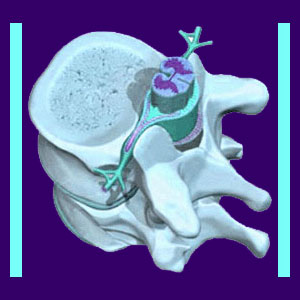
There are many possible causes of spinal stenosis which may work alone or in combination with other factors to mildly or severely decrease the patency of the central canal space. Spinal stenosis is a common condition associated with aging, but is blamed for enacting severe back pain in millions of patients. Stenosis is sometimes an independent process, but more often is directly sourced by some other causative spinal abnormality.
This article will focus on the exact reasons why stenosis exists within the central canal and how each potential cause or contributor may enact symptoms when neurological interaction occurs. If you are curious about where spinal stenosis comes from, then this dialog will provide the answers to all of your questions.
Common Causes of Spinal Stenosis
There may be several underlying reasons for spinal stenosis to exist:
Degenerative disc disease is when the spinal discs dehydrate and shrink causing loss of disc height. This process can cause the escalation of the spinal arthritic processes and contribute to increased bone on bone contact which results in arthritic debris within the central canal.
Herniated discs can push into the spinal canal, especially when they are central or paracentral in configuration. If the disc has a central herniation, it can create a mass effect on the spinal canal and create the start of a stenosis condition. Generally, herniations do not affect the neurological functions of the spinal cord indefinitely, although some may produce acute symptoms, particularly when they are combined with posterior canal ligament hypertrophy.

Arthritis in the spine can sometimes produce bones spurs that can impinge on the spinal canal. The build-up of arthritic debris is also a major, but completely normal, process which narrows the central canal in high wear regions. Arthritic causation can be the most difficult stenosis cause to actually resolve without surgical correction.
Spondylolisthesis can cause the shifted vertebra to move so far forward or rearward that it will actually push into the spinal canal. In these cases, the stenosis will result since the central canal will not line up with the vertebrae above and/or below.
Atypical spinal curvatures, such as hyperlordosis, hyperkyphosis and scoliosis can compress the spinal cord in the exaggerated apex of severe curvatures.
Spinal Stenosis Causes
Remember, degenerative disc disease and osteoarthritis are conditions that are universally experienced with advancing age. Almost every older person will demonstrate a narrowed central canal in the low back and/or neck, but only a few will develop symptoms.
Any of the causes of stenosis which touch the cord or cauda equina should be monitored. However, research shows that only structures which actually compress the cord or cauda equina will likely produce significant symptoms. Simple crowding or touching these nerve tissues usually will remain asymptomatic.
Mild to moderate canal stenosis is rarely problematic. It is easy to use stenosis as a scapegoat for pain, especially in elderly individuals. Unfortunately, most doctors do not inform the patient that this is a normal condition. Instead, many doctors scare the patient half to death, when they tell them their spinal canal is narrowing. No wonder the nocebo effect is the actual cause of pain in so many post-diagnosed patients who never had pain before.