Chronic disc pain conditions strike fear into the hearts and minds of many back pain patients. Herniated discs have the nasty reputation as a serious and debilitating spinal disorder. Many patients suffer from chronic disc related pain for many years without finding any effective treatments or therapies.
Why is herniated disc pain so treatment-resistant? Why do patients suffer for so long despite active treatment? Why do spinal surgeries demonstrate such poor results for disc-related pain? The answers to these questions are clear once you realize that herniated discs are rarely the actual source of symptoms in many diagnosed patients.
This treatise investigates the mythology surrounding chronic disc pain from herniation and degeneration.
Chronic Disc Pain Origins
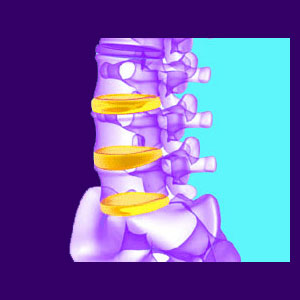
Yes, you have one or more herniated discs. No one is disputing that. Guess what, I have 12 of them! My L4/L5 and L5/S1 discs are in terrible shape, all the discs in my neck are herniated and the first four in my thoracic region, as well. I saw the MRIs and sure enough, those discs certainly do look scary to me. I listened to the doctors and became even more frightened of the consequences of these bulging and ruptured discs. Actually, once I learned that I actually had 2 problematic discs in my lumbar spine, my pain became steadily worse. How is this possible?
Well, the diagnostic nocebo effect is very powerful and can make all painful conditions worse, regardless of whether they are caused by a physical issue or a psychosomatic process. This same event occurred later in life when I was told of my severe disc issues in the neck and upper back. I immediately felt some symptoms intensify and even developed pain where none had been present before!

Chronic Spinal Disc Pain Realities
I suffered from horrific pain for 18 years that was mistakenly blamed on my lumbar herniated discs. If I listened to the diagnosis and prognosis of my condition according to literally dozens of doctors, chiropractors and complementary therapists, I would surely be completely disabled by now. However, the reality is that I am still physically active and even found a great cure for my pain which is well detailed in our proprietary pain relief program.
Herniated discs are an extremely common spinal abnormality. They exist in so many patients who do not even know they are present. That is because they normally cause no pain or related symptoms at all. This fact is supported by wildly widespread medical research and newly introduced guidelines for diagnosing pain which would have previously been blamed on disc pathologies. At this point, the major medical associations almost all agree that mild to moderate disc issues are mostly coincidental to most cases of chronic back and neck pain. About time these doctors caught up to speed with the truth.
Fresh disc injuries can be painful, but will usually heal on their own, with no treatment, in 6 to 12 weeks. A minority of disc injuries might require conservative treatment, but will once again heal in a matter of weeks. It is almost unheard of for a herniated disc to cause chronic pain. Why then do slipped discs have such a bad reputation as long-term pain syndromes?
Chronic Disc Pain Scapegoat
Herniated discs are blamed for so many chronic pain syndromes for several reasons often working in tandem with each other. Disc herniations are extremely common. They often exist coincidentally with an unrelated psychological pain syndrome or may take the blame for symptoms caused by another unrelated structural issue. The subconscious mind knows the herniated disc is there and understands that it is a good location to begin psychosomatic symptoms. A pain condition with a diagnosable anatomical cause is far more convincing than one which can not be identified.
Some medical providers still mostly deny that the mind can enact a physical pain syndrome within the body, despite the tide changing fast due to the development of the ever-growing field of mindbody healthcare. Research has definitively proven that the mind interacts with the body constantly and can cause many physical reactions. Some traditionalist doctors accept many of these reactions as mindbody phenomenon, but strongly refute others. Remember, medical science does not train doctors to recognize, diagnose or treat psychosomatic pain syndromes, so this is no surprise. Add to this fact that physical medicine is a huge industry and you will see why the economic motivation will keep a few doctors from accepting this fact for years to come.
Finally, there can be pain associated with herniated discs. As previously mentioned, a new injury can be painful, but will heal. It is the assumption of most medical professionals that continuing pain is the result of lingering disc symptoms, when in reality, this is very rare. If this were the true situation, appropriate back pain treatments would surely cure the chronic suffering, but as we all know, they seldom do. In addition, nonphysical programs such as knowledge therapy would be completely useless against an anatomical pain condition, but in reality, they have worked wonders for millions of patients, including this humble author.

Ok, let’s leave the mindbody stuff out of it and think about the purely physical for a moment. Consider too the complexity of the spinal anatomy with its diversity of tissues. Pain may seem to come from a disc, but may in fact be caused locally or neurologically from a completely unrelated structural condition. I see this so often in patients with lower body symptoms, like sciatica and difficulty standing. The symptoms are typically blamed on a coincidental lumbar herniation, when all along they are actually sourced from unrelated cervical spinal stenosis. Be careful with your assumed diagnostic pronouncements doc! These can get you into real legal trouble.
Opinions on Chronic Herniated Disc Pain
If you are like me, there is a good chance you are fed up with your chronic disc pain. There is nothing that can describe the fear you must feel for your future and the overwhelming frustration you experience from your present failing treatments. I completely understand what you are going through.
Take time to learn about why your pain might not be related to your poor maligned herniated discs at all. Remember, no one is disputing the existence of the herniated discs, I am merely presenting the opinion that these discs are rarely the cause of any long-term pain.
Do the research for yourself. Learn the facts. Accept the truth. Once you can do this, the cure is so close, you may simply be able to reach out and grab it. Bye bye chronic disc pain. This is certainly not an absolute, as there are exceptions to every rule. However, unless the disc is definitively causing a major health crisis, such as cauda equina syndrome, it is worth considering in virtually every case.