
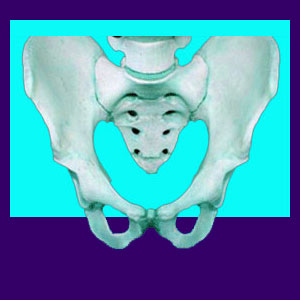
Chronic sacroiliac pain is an enduring and often debilitating concern for many patients and justifiably so. After all, the pain can be severe and might cause a variety of functional deficits to occur. The SI joint may be the source of discomfort in rare instances of severe injury or excessive degeneration. However, these cases represent only a small fraction of all diagnosed sacroiliac joint concerns. Many cases are misdiagnosed as the real source of pain, when all along another structural or ischemic process is actually responsible for all that misery. Most patients will never question the diagnosis, since they do not know enough about the joint itself or what to expect in terms of symptoms. All they know is that they have pain and are relieved to finally know the source. Too bad the working causative theory may be wrong.
This report explains why sacroiliac joint pain might become chronic and what can be done to finally cure the suffering.
Chronic Sacroiliac Pain Causes
The SI joint is unbelievably strong. Injury is possible, but unlikely in most cases. Additionally, even if injured, the joint will heal, as this is the body’s main imperative. Normal injuries heal. Period. There is virtually no reason to even consider the idea of chronic pain from anything other than a catastrophic injury to the SI joint.
Arthritis and degeneration affect most joints in the body and the SI is no exception. However, these changes are normal and not generally the reason for any significant or chronic pain. The SI joint holds up quite well as we age and pain syndromes based on typical degenerative changes are illogical in most cases.

Chronic Sacroiliac Pain Theories
Most doctors know all too well that the structural changes often documented on MRI and x-ray imaging are normal and not generally symptomatic. This includes most arthritic changes and mild osteophyte formation. Of course, the possibility exists that these issues can enact pain in rare instances, but not in the majority.
This is exactly why the ligaments in the sacroiliac have been implicated in so many painful complaints. This is much harder to prove on diagnostic testing and virtually impossible to disprove, making the ligaments a perfect scapegoat condition. Laxity and tension are equally blamed, leading to the often crazy diagnosis of sacroiliac joint dysfunction. Now, this condition does exist, but not in over 90% of diagnosed sufferers. These poor souls may have been misdiagnosed and their pain is probably due to oxygen deprivation, or some other yet undiscovered structural issue, and nothing more.
Chronic Agony with Sacroiliac Pain
Chronic pain not due to the most obvious severe injuries rarely occurs due to purely anatomical reasons. The Cartesian philosophy of modern medical science always seeks out a physical structural explanation for pain, which has been its downfall. This is one of the most often cited reasons for the back pain epidemic which is running wild within the healthcare system. It is also medicine’s greatest failure.
Chronic pain is typically a partial or total result of the mindbody process. Rather than seeking out and blaming coincidental and normal structural abnormalities and the usual degenerative processes, it would be wise to search internally in the mind for the real answer to the question…
“Why won’t my pain go away?”
This is of course unless you have been victimized by an extreme physical trauma which may have led to permanent injury. In these far less common instances, conservative or drastic intervention may be needed, effective and even successful.