
There has been a long history of controversy concerning the diagnosis of degenerative disc disease. Some enlightened doctors will rarely, if ever, make this diagnosis. Other doctors use this completely normal process to frighten patients into long regimens of treatment or even surgery.
Degenerative disc disease is a condition in which the diagnostic parameters are not clearly defined by medical science. Like many spinal conditions, DDD is often one of the causative theories involved in diagnostic eclecticism. This means that it may be implicated in pain scenarios by some doctors, while discounted by others. Treatment choices will depend greatly on the whim and preference of the care provider and generally offer poor curative results.
The most recent diagnostic procedures set forth by some of the largest medical associations have shown DDD to be innocent of all correlation to chronic back pain events. Therefore, physicians have been discouraged from making the diagnosis unless definitive proof of a pain causing mechanism is evident.
This article details the diagnosis of disc degeneration and some of the inherent problems with the diagnostic process.
Degenerative Disc Diagnosis
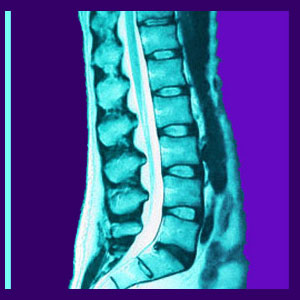
DDD is visible on x-ray, MRI, CT and myelogram imaging. The loss of intervertebral disc space is easy to notice and looks rather scary. The patient gets visions of those spinal bones becoming dangerously close to one another.
The name itself, degenerative disc disease, is enough to frighten most patients and produce a powerful nocebo effect. It is rarely mentioned to the patient that this is a normal, expected and universal condition associated with aging. Nor is it mentioned that many people discover they have DDD by accident, when having an imaging study done for a completely unrelated condition. These people have no pain! That is until they find out that they have a disease in their spines. Once again, a powerful nocebo effect is imparted.

Disc degeneration can not be diagnosed by physical exam or any other means except internal spinal imaging. That being said, I can basically guarantee that virtually all of you have it in the lower lumbar and possibly mid to low cervical levels. It does not take a doctor to know this basic fact.
DDD is a part of getting older and after age 30 will be found somewhere in the spine for sure. Many of you have multiple levels of disc desiccation and do not even know it. You have no pain and you might never develop any in relation to this normal intervertebral deterioration.
Diagnosis of Degenerative Disc Disease Opinions
A good doctor will explain that this condition is a very common and normal part of aging. A good doctor will tell you that most people have this condition and do not suffer pain or symptoms. A good doctor will not scare the hell out of you with this diagnosis. If you do not have a good doctor, stop reading and go find one
In my case, the diagnosis of degenerative disc disease set the stage for the 18 years of protracted suffering from what I thought was pain caused by DDD and subsequent herniated discs. Eventually I found out that I, like millions of other patients, was misdiagnosed. I know at this stage that the DDD in my spine is not the source of my pain. If it was, we would all have identical expressions of pain, since we all have virtually identical spinal degeneration as we get older.
Back Pain > Degenerative Disc Disease > Diagnosis of Degenerative Disc Disease