
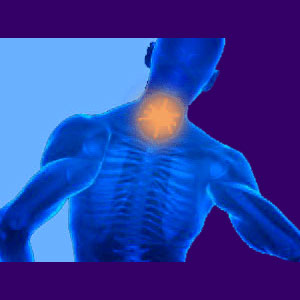
A herniated disc in the neck is the second most likely location to experience this common spinal abnormality. The neck is an anatomical area which experiences considerable stress, both due to its wide range of movement, as well as the considerable weight of the head. Herniated discs are intervertebral spinal tissues which bulge or rupture due to injury or degenerative processes. Although disc herniation is common in the cervical spine, it is rarely the source of ongoing painful symptoms. Complete details of additional cervical conditions which may be the true source of symptoms can be found in our neck pain section.
This narrative investigates cervical intervertebral herniations, including the many problems common experienced during diagnosis and treatment.
Herniated Disc in the Neck Diagnosis
Many people have cervical disc conditions. Herniated discs due to trauma are very common in the general population, but rarely cause continuing pain, although they might be symptomatic when first injured.
Most patients who are diagnosed with a cervical disc problem are immediately affected by the nocebo effect of the diagnostic procedure and often experience a considerable worsening of symptoms after the confirmation of a herniated disc.
Doctors who scare a patient into thinking they have been permanently damaged by this diagnosis make this nocebo effect exponentially worse. This is the reason why it is crucial for a patient to learn the facts about disc injuries for themselves.

If you allow your doctor to control your entire understanding of the diagnosis, then you will have to hope and pray that they will not try to take advantage of your ignorance by recommending treatments which may be in their financial interest far more than in the best interest of your health and future functionality. Remember, some doctors are out to make money primarily and care for patients only when the 2 possibilities are compatible. If they have to choose, then they will go for the cash every time. Medicine is a business.
Cervical Herniated Disc Treatment
Although there are literally hundreds of traditional medical and alternative complementary therapies for disc conditions, the overwhelming majority are considered to be symptomatic treatments. This means that the therapy may improve the symptoms of the condition, but does nothing to cure the problem or eliminate the underlying causation.
The only true cures for actual structural disc pain are neck surgery and spinal decompression. Of course, surgery should be avoided unless there is no other option, since it has inherent risks and demonstrates extremely poor statistics for permanently resolving neck pain.
In many postoperative patients, the structural issues return, in the form of re-herniation or herniation at a nearby level. In other cases, the structural issues are resolved, yet pain remains. This often denotes a misdiagnosis of the actual causative process, making the surgery unnecessary to begin with. Either way, the patient loses.
Disc pathologies feature the highest rate of failures when treated surgically. This is saying a lot, since so many invasive back procedures disappoint with abyssal results.
Herniated Disc in the Neck Conundrum
If disc herniations rarely cause perpetual pain, why do they have such a bad reputation for creating vast armies of walking wounded who blame their suffering on intervertebral disc conditions? This question can be answered with one simple word… misdiagnosis.

Most patients with chronic pain blamed on a herniated disc are actually suffering from symptoms caused by some other structural or nonstructural process. Far too many individuals have herniated and ruptured discs, but experience no pain at all. Most of these people do not even know that they have anything wrong with the discs in their spine. Herniated discs are usually coincidental to any pain and unfortunately bear the brunt of the blame unjustly.
Not too long ago, major medical organizations informed their physician members of diagnostic protocol changes regarding the way back and neck pain should be diagnosed. These changes warned that the various common spinal irregularities, including herniated discs, show no correlation to the incidence of symptoms. Therefore, these structural issues should not be blamed as the cause of back pain or neck pain without definitive clinical evidence.
Herniated Disc in the Neck Factsheet
If you have been diagnosed with a herniated cervical disc, do not fear. There is a good chance that your disc injury might heal all by itself. If you continue to have pain, consider trying an alternative approach, such as knowledge therapy, before even thinking about any drastic or expensive medical back pain treatment option.
If all else fails, I highly recommend spinal decompression for actual disc related pain. The results are good and the risks are far less than a surgical approach. If you need help with your disc conditions, feel free to get a second opinion before agreeing to any particular treatment plan. In fact, this is a great idea, no matter what the first doctor says. Subjectivity is simply far too much of a problematic issue when it comes to neck and back symptoms.