
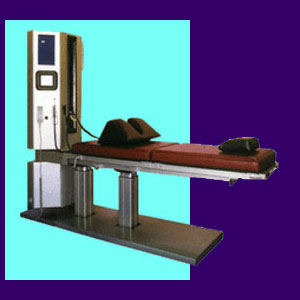
A herniated disc machine is a common name for any of the various devices that can treat problematic disc-related back or neck pain at home or in a professional setting. These “back pain machines”, as they are sometimes called, use precise and gentle movements to stretch the spine. The idea behind this treatment is to relieve nerve pressure by achieving decompression of the intervertebral discs.
There are several different principles utilized by some of these devices, but many of the best use the concept of non-surgical spinal decompression to relieve symptoms. Other types of disc therapy devices exist, but most embrace less logical methods of treatment and some may be completely idiotic in their design and execution. This is especially true of many home-use devices sold online and marketed as virtual miracle cures to gullible patients who pay a premium to be scammed.
Varieties of Herniated Disc Machine
Old fashioned spinal traction tables have been used for many years by osteopaths and chiropractors. These devices use pulleys and weights in an attempt to stretch the spine and re-establish narrowed intervertebral disc spaces. These devices have never been proven to work well and some have been known to cause injury.
Back pain inversion tables have also been used to attempt spinal decompression. These devices literally hang you upside down, trying to counteract gravity, and use your own weight to stretch the spine. Inversion therapy is over 2500 years old and still practiced for many painful conditions today. Inversion has never been shown to be effective and might be dangerous to your back. Rare instances of stroke, aneurysm and circulatory problems have been reported using inversion therapy. Personally, I think inversion is better left as a fitness activity than a therapeutic one, but many patients swear by it.
Vax-D is a state of the art technology that has demonstrated excellent results for the non-surgical treatment of herniated and degenerated discs. Vax-D patients usually receive a total of 20 to 25 daily treatments over several weeks. Vax-D claims a 70% cure rate for these conditions after a 90 day period. The procedure is not convenient, since it requires time almost every day for a month. It is also rather expensive and may not be covered under many health insurance plans.

There are other decompression machines in use, such as the DRX 9000, Antalgic-Trak, Hill DT and the Accu-Spina system. The DRX 9000 has fast become the most popular form of non-surgical decompression and is also perhaps the most available. These devices work on similar principles to achieve decompression of the intervertebral discs and spinal facet joints. Decompression therapy has provided a solid nonsurgical choice for patients with verified disc pathologies which would have been recommended for surgery just a few years ago.
Finally, the widespread use of Cox Technic continues to be an cost effective method of spinal decompression. It is especially popular among patients who are already satisfied with standard chiropractic care.
Can a Herniated Disc Machine Cure Pain?
We suggest that spinal decompression using a herniated disc machine might be a good option to investigate if you are on the path towards back surgery. If other more convenient and conservative treatments have failed you, then using one of these back pain machines would be preferable to going under the knife.
We have seen both the Vax-D and DRX9000 in action and was impressed by the technology and therapy statistics we witnessed. The decompression procedure seems safe and effective for resolving herniated discs and degenerative disc disease. If you are suffering from one of these back problems, you might want to get more information on these procedures before considering surgical correction.
As for as the previously mentioned home-use herniated disc machines for back pain relief, let common sense be your guide. Most are thinly-veiled marketing ploys which will have most smart patients looking elsewhere. However, when people are desperate for relief, they might try anything.
Be careful out there, since many home-use machines are scams and nothing more. If the product was truly that great, we would all know about it and would be using it to effectively end back pain right now. Be sure to research any purchase extensively for risks and reviews. In most cases, you will be better off saving your money.