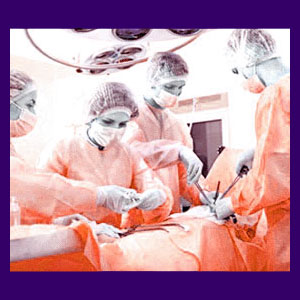
Herniated disc surgery is a drastic, but incredibly popular and widely practiced form of invasive treatment for diagnosed spinal disc pathologies. When it comes to disc procedures, there are several possible approaches used to provide symptomatic relief. Finding the correct surgical procedure gives the patient a far greater chance of achieving lasting positive results from their surgeries and reduces the chance of experiencing failed back surgery syndrome. However, it must be absolutely certain that the disc is indeed the source of symptoms in order for any operation to be successful. Unfortunately, since many disc pathologies are mistakenly theorized to be the cause of symptoms, many surgeries subsequently fail.
This narrative cautions patients on the downside of herniated disc operations and the reasons why surgery is usually completely optional and unnecessary for herniated disc patients.
Herniated Disc Surgery Procedures
Some surgeons concentrate of procedures which actually seek to treat the existing disc material, while maintaining the normal form and function of the vertebral column. Minimally invasive procedures are always recommended whenever appropriate and available. The most common of these less invasive forms of disc surgery are IDET and nucleoplasty. These techniques seek to use the most minimally damaging ways to reduce the herniation by burning off some of the pressurized internal disc nucleus material.
Sometimes, the surgeon will remove part or all of an affected disc, using a discectomy procedure. Partial disc removal techniques come in a great variety of approaches and are the most popularly utilized form of spinal operation worldwide. Herniations are reduced by literally cutting away the bulging portion of the disc. Once again, minimally invasive versions of this operation are preferred to speed healing time and minimize trauma to healthy tissue.
Less common, but still performed, are the old fashioned foraminotomy and laminectomy procedures. These surgeries are not usually a good idea as stand alone solutions for disc pain. They are best utilized as add-on procedures when performed in tandem with a discectomy technique.
Herniated Disc Replacement Surgery
Artificial disc replacement surgery is part of the newest wave of spinal operations used to correct disc pathologies. In this procedure, the old organic disc material is removed via discectomy and a new artificial disc is implanted between the vertebrae. This procedure makes the most sense of all disc surgeries, since the concept maintains normal disc function as a vertebral spacer and spinal shock absorber. The technology is still relatively new and will certainly improve over the next few generations of implanted devices. Unfortunately, the actual application of the technique shows that much work still needs to be done to improve the synthetic discs in order to have them last under the duress of real life.
Disc nucleus replacement is also a fascinating option being developed currently by several prosthetic manufacturers. Maybe this approach may be a good compromise between the synthetic and the organic, since it will seek to maintain the natural outer disc structure and simply replace the internal nucleus.
Herniated Disc Surgery / Spinal Fusion
Spinal fusion surgeries are used as a last resort for unresolved disc pain conditions. Fusion is generally an extremely poor choice for almost any dorsalgia syndrome, since it restricts spinal movement and often creates stress, pain and degeneration in surrounding vertebral levels.
Patients who endure fusion surgery are the most likely to undergo numerous procedures over the course of their lifetimes to maintain spinal function and integrity. A fusion should only be considered as an absolute last option is almost every case of herniated disc pain.
Avoiding Herniated Disc Surgery
Surgery is almost never necessary for patients with herniated discs. Most disc pain will heal, either all by itself, or with appropriate conservative treatment. New spinal decompression systems demonstrate excellent results for alleviating disc pain without the risks or complications of back surgery.
Of course, do not forget that herniated discs are very common in the population and rarely actually cause long-term pain. Bulging discs are the single most common back pain scapegoat condition blamed for symptoms, but are rarely actually responsible. This fact has received countless endorsements including those of major orthopedic and neurological organizations which are actually responsible for training doctors.
Physicians have been advised never to diagnose a back or neck pain complaint as coming from a herniated disc, unless there is definitive evidence of a causative process linking the pain and the spinal abnormality. This is a fact that most patients never know.

Herniated Disc Surgical Options
Surgery does not demonstrate good results when it comes to curing disc pain over an extended timeline of more than 7 years. Some patients receive a short term reduction of symptoms while others receive no benefit at all. Regardless, most patients have relapses of pain anywhere from a few days to a few years down the line.
The most logical reason for this common scenario is not poor surgical technique, but rather misdiagnosis of the actual cause of symptoms. Make sure that your herniated discs are really the spinal troublemaker before even considering back or neck surgery. In many instances, if your disc pain does not respond to proper conservative treatments, it will not likely respond well to surgery either. Even when the diagnosis is sound, re-herniation is a huge problem, especially in post-discectomy patients.
To summarize this article, it is vital to comprehend that herniated disc surgery can always be performed. However, it can never be undone. The only cases where surgery might actually be a best option include definitive conditions involving severe spinal stenosis or foraminal stenosis enacted by a herniation. If this is not your case profile, then the statistics are clearly against you.
Even if this does describe your exact situation, the chance for a cure is still poor. It is unfortunate that of all spinal conditions, disc pathologies respond worst to surgical intervention. Armed with this knowledge, make your decisions about herniated disc surgery incredibly carefully.