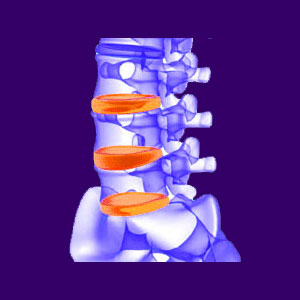
A herniated disk is an alternate spelling of herniated disc. Disk or disc is actually quite irrelevant. What really matters is that problems with the intervertebral discs account for the majority of back pain complaints. Furthermore, most of these disc conditions are merely scapegoats on which to blame unexplained back pain. There are so many different disc-related diagnoses, including bulges, herniations, protrusions, extrusions, ruptures, sequestrations and degeneration. In each category, there are several sub-classifications, increasing the number of possible disc pathologies exponentially.
When you account for all the possible disc conditions which may exist in the human spine, wondering whether to spell the word disc or disk seems quite meaningless. But, if you must know, the accepted medical spelling is disc.
Herniated Disk Pain
There is only a small chance that chronic back pain is the result of a herniated disc. A new disc injury can be painful, but the pain will most likely subside on its own. Very few disc injuries require professional medical intervention, although it may be wise to have some borderline conditions monitored regularly to mark any degenerative changes which may occur over time.
Sometimes a disc can cause some neurological effects, such as in the example of cauda equina syndrome. These disc problems are the minority of all patient complaints, but it is always wise to get a medical opinion if neurological symptoms are present.
Why do so many patients have long lasting unresolved back pain from their herniated discs? The answer is rather simple. Herniated discs are a commonly accepted scapegoat for back pain. Everyone has heard countless horror stories of disc-related symptoms.
The nocebo effect of the mere words herniated disc will cause the start, exacerbation or perpetuation of pain in many patients. Doctors excel in diagnosing disc injuries and informing the patient that the pain is the direct result of the bulging disc. In some cases this is correct, but in the remainder, this is a gross misdiagnosis of the actual cause of pain.

Herniated and Bulging Disk Reality
There is little proof that back pain is the result of most herniated disc problems. Often, the symptoms do not even make sense according to the clinical diagnosis. It is very common for patients to have pain, tingling, weakness or numbness in areas not affected by the disc injury. It is common for patients to have full nerve signal in areas that should be impinged by a herniated disc, yet have strong symptoms in other unaffected areas.
Some patients will show a right side lumbar herniation at a given level, but suffer symptoms on the left side in areas not even related to that spinal nerve root. When this is the clinical picture, it is ridiculous to blame the pain on the coincidental disc herniation. However, it happens millions of times every year.
Herniated discs are extremely common in the general population. Many people have one or more and do not even know it. These are often discovered by accident in an imaging study for a completely non-back pain related condition.
How can disc herniations have such a bad reputation when the majority of them are completely asymptomatic? It makes no sense.
Herniated Disk Summary
Do not just accept that all your pain is the result of a disc injury. This is especially true if a herniation is discovered and you can’t even remember when it might have occurred. The odds are that your pain is from some alternate physical, or possibly, mindbody cause. Remember that the vast majority of all chronic pain is caused or worsened by stress and emotional issues.
Research your specific disc problem and compare the clinical picture to your actual symptoms. If they do not match, you are on the wrong path pursuing herniated disc treatment as a method of achieving back pain relief.
The best way to learn about your diagnosis is to select medical terms from your radiology report and search for them online. This will give you a good overview of what each term means. Once you have the basics, take time to research your specific diagnosis in detail, including inquisitive search criteria like “does a herniated disc cause pain?”
Be sure to read information from lots of different sources so as to get an objective view of the facts. Once you are fully informed and ready, then take your findings to your doctors and discuss all your questions with them. They should be able to answer all your questions in a manner which makes sense, as it relates to your specific diagnosis. If they can’t, it may be time to move on to a better doctor and get a second opinion on your spinal issues.