
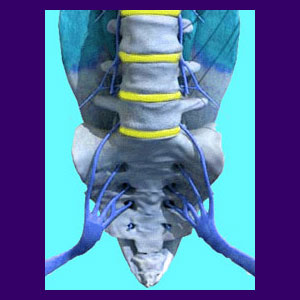
Hypolordosis is a very common diagnostic conclusion often implicated in causing or contributing to a variety of back and neck pain scenarios. While some mostly unenlightened care providers view a minor lack of lordotic curvature as the source of back pain, it is very clear that a decrease in cervical lordosis or lumbar lordosis is usually one of the symptoms of whatever causative condition is truly creating the pain. In essence, the lordotic decrease is a result, rather than a cause.
The scope of this article will examine a decreased or lost degree of lordotic curvature in the neck or lower back. We will discuss why this structural change occurs, as well as its potential effects.
What is Decreased Spinal Curvature?
The lumbar spine and cervical spine normally maintain conservative lordotic curves. This means that the open end often curve faces the posterior side of the body. These curves are instrumental in preventing and absorbing shock throughout the spine and develop when we are very young children.
A lack of normal lordosis is also commonly called a straight spine or straight back when it occurs in the lumbar region. It is termed a straight neck or military neck when it occurs in the cervical region. All this diagnostic conclusion means is that the normal degree of curvature has been reduced in the affected area.
A huge number of you have written to me inquiring about the meaning of a loss of lordosis noted on your MRI study reports. This is very disturbing, since it clearly shows that your doctors are not doing a very good job in providing you with the basic information which is within your right to know. You are paying them for their services. Please never leave their office without a full explanation of the diagnosis they have rendered. After all, it is your spine, your health, your life. Don’t be afraid to demand answers to all your questions, no matter how busy or disinterested your physician may seem. If they can not help, it is time to consider getting a better doctor.

Hypolordosis Truths
Hyperlordosis and decreased lordosis are both commonly associated with muscular spasms. When the back muscles are exceptionally tight, they can actually pull the spine into an unnatural configuration, either too curved or more commonly, too straight.
A lack of lordotic curvature is commonly noted on MRI and X-ray imaging studies of back pain sufferers. However, follow-up studies often show that the lordosis returns to normal once the pain is over, proving a connection to whatever process is actually sourcing the symptoms to begin with.
In my own experience, I notice a distinct connection between back muscle spasm caused by ischemia and the occurrence of decreased lordosis in the neck and the lower back. I have personally demonstrated a distinct lack of curvature in the lumbar and cervical areas my entire adult life.
Hypolordosis Guidance
If you are in pain and have been diagnosed with a lack of cervical or lumbar lordosis, do not be surprised. This is very common and is usually nothing to fear. In most cases, the spinal curvature issue is simply reactionary to the painful complaint and should not become any major health concern.
In some rare instances, the spine will straighten too far or actually reverse the normal curvature. These events can be problematic and may require drastic or even surgical interventions. In these cases, you will know if this applies to you, since the doctors will make it abundantly clear.
For the rest of you, consider not stressing over a loss of spinal curvature, as it is quite normal and should not generally be the sole focus of your treatment regimen. As mentioned previously, most cases are a result of pain rather than a cause.