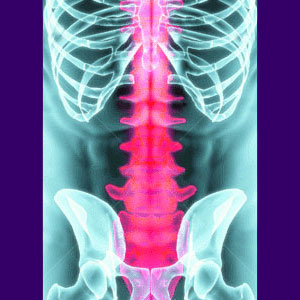
Lower back injury is the second leading cause for a person to visit a physician. It is also the #1 reason why a person will stay home from work. Lower back pain is an epidemic that grows in size and scope every year.
Why are our collective lower backs suddenly so prone to injury? That answer is simple… They aren’t. Historically, the collective medical records of humanity show little emphasis on back ache, or chronic pain of any variety, for millennia. Back pain has become a huge concern only in the past 70 years or so, with more and more patients entering treatment and few recovering each year. Unless our collective anatomies have suddenly begun to fail us, something seems amiss.
Let’s explore the occurrence of low back trauma and why it is deemed causative for inducing chronic pain, despite structural healing, in so many patients.
Lower Back Injury Nocebo
It is a common belief that the lower back is a region that is easily injured and difficult to rehabilitate. The lower back does receive a lot of wear and tear in our lives. That fact is true. However, evolution has provided us with an anatomy that will function despite normal spinal degeneration.
The lower back is a strong and able structure that will not usually fail us under normal usage. The idea that the lumbar region is delicate and fragile is a myth that creates a powerful nocebo effect on affected patients and society as a whole.
If the idea that progressive degeneration sets the stage for injury, then we would expect to see a tremendous amount of serious back injuries in the elderly, since they obviously suffer the worst of the spinal aging concerns. However, this is not the case. Lower back injury, and back pain in general, diminish drastically after the years of responsibility, namely ages 26 through 55.

Low Back Injury and Lumbar Injury
It is common for lumbar injuries to occur. Laborers, athletes and those with repetitive motion jobs put tremendous stress on their lower backs. Sometimes this stress can cause a herniated disc injury, back muscle pain or some other type of lower back condition. Most of these injuries are not serious, even though they might be very, very painful for a time.
The real problems with lower back injuries usually occur after treatment begins. The diagnostic and treatment processes create an environment of fear and persistent pain. The patient is rarely reassured that they will be fine and should recover completely. More often, they are warned that their backs are now prone to re-injury and that they will have to make some drastic changes in their activities and lifestyle.
Patients are rarely told the truth of the matter. Healing is the main priority for the physical body. Injury occurs and healing begins almost immediately. The body can heal horrific and extreme injuries. Why do we think it can not heal the common scapegoats which take the blame for most cases of chronic dorsalgia?
Treatment for Lower Back Injury
Most lumbar back injuries will heal all by themselves. It has been shown in European research studies that back pain patients who do nothing special to treat their pain actually get better faster than many who go through the medical system. I am not at all surprised by this study. Patients who view back pain as nothing more serious than a bad headache will recover and move on with life. Patients who are convinced that they have been irreparably injured will undoubtedly become damaged goods.
Medicine has failed to find a cure for most back pain conditions, but has excelled at discovering many long-term symptomatic treatments. A cure is not in the economic interest of the back pain industry. The accepted treatment protocol is far more profitable than a cure could ever be.
Another reason that medicine has failed to cure most physical back pain is that many conditions require no cure. Common conditions such as degenerative disc disease, herniated discs and spinal osteoarthritis are rarely symptomatic. However, by the time many patients get psychologically worked over by the medical community, they are convinced that they have some impossible to cure back disease or injury. Meanwhile, they have a normal back with the same spinal degeneration that we all face as we age. It is a sad situation for the poor patient.

Injury to the Lower Back
How do I know all these ideas about lower back pain are correct? Did I study them in school? Did I attend a lecture on them at some prestigious medical conference? How do I know how a patient feels as they are going through the treatment process? I know because I live with back pain.
First hand experience is something you can not ignore. Decades of research and suffering, frustration and hope, treatments and more treatments, have made me the person I am today.
I realized after many years of torture that my main health problem was a misdiagnosis of the actual reasons for my pain. My 2 oldest herniated discs were innocent. My degenerative disc disease was innocent. My previously diagnosed scoliosis turned out to be a completely normal degree of curvature in my spine.
I did not have any lower back injury after all, yet I had terrible pain. Eventually I found a way to be free from pain forever. I am no longer a prisoner of ignorance and fear over perceived injury to my back. I better understand the process of pain and am not dominated by it. I suggest that all patients with long lasting injury go about learning these same lessons.
Knowledge therapy is one of the major positive influences on my ability to function despite injury and pain. This path involves no financial cost and no health risks, so I have absolutely no problem recommending it for further consideration by every fellow patient.