
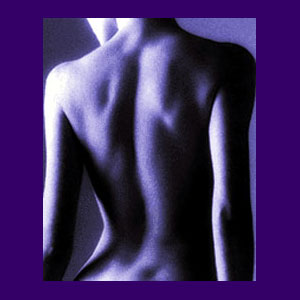
Lumbar lordosis describes the degree of inward curvature of the lower back region. The term is also sometimes used to simplify a diagnosis of hyperlordosis, wherein the curvature is greater than is deemed typical. Most of these increased curvatures are mild to moderate in severity and will not cause any symptoms, pain or obvious physical deformities.
Some mild to moderate curvatures might create the appearance of a hollowed out lower back and protruding buttocks. Severe hyperlordosis is likely to cause noticeable visual deformity of the spine. Lordosis is usually not a cause for concern, but any suspicious spinal curves should be checked out by a qualified physician. Other common diagnostic terms associated with this particular form of atypical spinal curve include exaggerated lumbar curvature and lumbar hyperlordosis.
Other patients might present diminished lordotic curvatures in the lower back, known as hypolordosis. Once again, most cases are idiopathic and asymptomatic, but some can present pain problems when certain neurological or mechanical issues occur.
This essay explores the normal and atypical variations of lordosis in the lower spinal regions.
Lumbar Lordosis Discovery
Many patients discover that they have mild to moderate versions of atypical lower back curvature when undergoing physical examinations or diagnostic imaging studies for completely unrelated reasons. Most people are shocked to hear that they have lived with an abnormal spinal curve for many years without even being aware of it.
Doctors must reinforce the fact that this condition is usually not symptomatic in these newly diagnosed patients. Lack of positive reassurance will undoubtedly cause a nocebo effect which might lead to a chronic pain condition in the lumbar spine.
Patients who are previously aware of a minor lordotic concern can also remain symptom-free, as long as they do not fear the condition. Once again, the role of their doctor or therapist is vital in maintaining a condition of health and confidence, rather than disease and fear.

Lumbar Lordosis Treatments
Most abnormal lumbar lordotic curves do not require any special care or treatment. The curves simply exist, but do not cause any particular physical pain or related symptoms.
In the rare case of severe lordotic curvature, the most common conservative treatments are physical therapy, specialized bracing and pain management drugs. Drastic treatment almost always consists of spinal fusion of the lumbar vertebrae. This operation is chocked full of risks and complications and should be avoided if at all possible.
Lumbar Spinal Curvature Editorial
Abnormal lordotic curves in the lower back often coexist with other atypical spinal curvatures such as scoliosis or thoracic hyper or hypo kyphosis. The spinal vertebrae are interrelated and interdependent structures. Conditions which affect one region will normally have a ripple effect on surrounding vertebral levels.
Multiple unusual spinal curves are still no cause for alarm, except in the most severe of expressions. Severely exaggerated lordotic curvatures or loss of the lumbar lordotic curve should be monitored and treated by a spinal curvature specialist.
As a final point, it should be mentioned that hypolordosis, or the decrease in typical curvature, is more common than hyperlordosis. Like all versions of lordotic change, there may be structural issues or injury to blame for this reduced lumbar curve also, but in many instances, this is a transient condition related to chronic tensioning of the postural muscles in the low back and buttocks.