
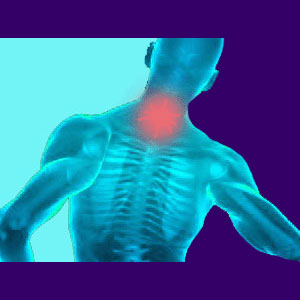
Neck pain relief means that the patient will no longer experience pain or related neurological effects temporarily or permanently. In cases of permanent relief, the patient is said to be cured of pain. Statistically, most neck pain treatments do not even offer hope for a cure, since they are symptomatic in nature and may only be capable of providing fleeting relief in the best case scenario. Other treatments can indeed cure a patient, but these therapies are usually drastic, possibly invasive and often incredibly risky. Regardless of the type of care the patient chooses in their quest for neck ache relief, statistics for long-term symptomatic resolution are not at all favorable.
This guide provides an easy to follow path towards finding lasting neck pain relief.
Need for Neck Pain Relief
lexion. When the head is pushed backwards, the neck may suffer from hyperextension. Both of these conditions can cause injury of the soft tissues, bones or discs in the neck.
The vertebrae and discs in the neck get a lot of wear and tear, since they are flexed often. Sometimes this constant usage can cause early or exaggerated degeneration to occur. Luckily, these degenerative processes are usually not symptomatic at all, or at least not to a large degree.
Neck Injury Relief
A spinal cord injury in the cervical levels can result in complete or incomplete paralysis. This means that the patient may be partially or totally paralyzed from the neck down and will lose some or all of the use of both arms and legs.
Even a less serious injury to the cervical area can cause symptoms ranging from headaches to shoulder pain to pain in the arms or hands. The common name for a neck injury that leads to symptoms in the arms or shoulders is a pinched nerve.

Many of these diagnoses are lack definitive evidence and may involve muscular interactions rather than true spinal nerve compression. A significant percentage of compressive neuropathy issues are misdiagnosed in the spinal anatomy.
Normal Neck Conditions
It is completely normal to have some mild to moderate disc degeneration in the cervical area. The constant movement of the neck will produce flattened discs in the majority of people over age 30 and similar patterns in many younger patients. Just because a disc has dehydrated does not make it a problem.
Make sure that you get a second medical opinion if you have neck pain and the only diagnosis given is degenerative disc disease. Likewise, the osteoarthritic processes are typically found in the neck and are often blamed for sourcing symptoms. In some cases, these theories may be correct, but in most, the widespread painful expression simply can not be adequately explained from the limited arthritic process observed.
Finding Neck Pain Relief
Most minor neck traumas affect the soft tissues only and should not leave any residual effects. Patients often report good results using over-the-counter pain management and applying heat or ice as directed.
For spinal causations, medical monitoring and/or treatment are advised. However, neck pain sufferers are cautioned that many structural issues can act as scapegoats for pain, rather than be the real causative processes which truly create the symptoms.
If multiple treatments do not bring the much anticipated neck pain relief, then patients may be wise seeking a second opinion on the reason for their continuing agony. Misdiagnosis is rampant, despite newer diagnostic guidelines which warn against implicating common spinal conditions as the source of pain without extensive documentation of proof.