The psychology of a herniated disc figures greatly into the possible symptoms that may be experienced by any diagnosed patient. Prolapsed discs are among the most feared of all back pain diagnoses and certainly bring an air of doom and gloom to all who are affected by this common spinal abnormality.
It is crucial for diagnosed patients to separate fact from fiction when it comes to intervertebral herniations. It is a known fact that most herniated discs are completely harmless and very few will not cause chronic pain. There is little, if any, evidence linking herniated discs to the incidence of back or neck pain.
This mindbody medicine article will explore some of the potentially serious emotional consequences of diagnosed disc pathologies.
Psychology of a Herniated Disc Diagnosis
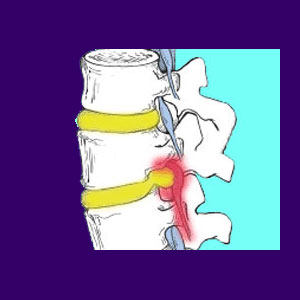
There is a very good chance any patient with back pain might have a herniated disc. There is also an excellent chance that people without any back pain also might demonstrate one or more herniated discs somewhere in their spines. Disc herniations are very common to experience in the cervical and especially lumbar areas of the spinal column. Disc protrusions are sometimes caused by injury, but can also be caused by the normal and expected degenerative processes which affect the spine, including degenerative disc disease.
Being diagnosed with a herniated disc is often described as the single scariest time in a person’s life. The mere utterance of the words herniated disc were enough to make me feel faint, when pronounced by my doctor in my early twenties.
I recall the many horror stories told to me by my mother, who suffered from a lumbar disc bulge which eventually led her to undergo an unsuccessful laminectomy prior to my birth. Worst of all, she never did fully recover and continued to have pain throughout most of her life.

Herniated Disc Mythology
We have all heard the stories about people who suffer from agonizing and never-ending disc pain. Herniated discs have a fearsome reputation as a treatment defiant disorder and also a chronic health concern. In actuality, neither of these myths is true.
Most mild to moderate herniated discs are not painful or symptomatic in any way. This is especially true for disc herniations due to normal degeneration in the spine. Herniations due to back injury might be painful for a short time, typically 6 to 8 weeks, but will usually resolve all by themselves.
Herniated discs are often blamed for enacting sciatica or causing a pinched nerve condition, but these instances are indeed rare and are usually just another form of back pain scapegoat.
Many objective research studies have concluded that there is little or no correlation between herniated discs and painful symptoms and most support the idea that even painful bulging discs should be treated conservatively and nonsurgically.
Psychology of a Herniated Disc Considerations
I still have a total of 12 known herniated discs in my back and neck. For many years, I was only aware of 2 in my lower back which were blamed for causing my miserable back pain for most of the first 2 decades that I suffered with symptoms. I bought into the idea, since I had faith in my doctors and did not even think to question their diagnosis. Well, that was my mistake.

It took me far too long to realize that the doctors had it all wrong. Luckily for me, Dr. John Sarno taught me the truth about disc conditions and most chronic back pain, in general. I used this knowledge to cure my pain. The experience was one of the most important of my entire life and a major step forward in my vocation evolution.
It is important to realize that most typical herniations should not be sources of lasting symptoms. I know of my herniations, few hold the potential to be symptom generators. Learn the difference between what is considered a normal bulging disc and what is considered problematic. Once you do, then you have to work on overcoming the negative psychology of a herniated disc diagnosis to the best of your ability.
I hope that you can break free from the considerable psychoemotional nocebo effect of the herniated disc verdict and achieve that rare heavenly state of a real cure, regardless of what type of disc condition you have or which treatment path you pursue.
Back Pain > Psychology of Back Pain > Psychology of a Herniated Disc