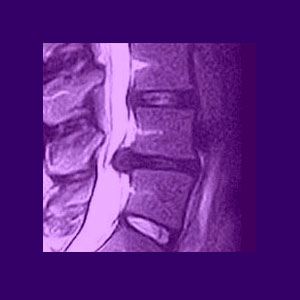
Ruptured discs are a sub-classification of herniated discs that actually break open and leak the nucleus pulposus into the greater spinal anatomy. The nucleus pulposus is the soft inner core of the intervertebral discs, contained by the tough annulus fibrosus, or outer disc wall.
There are several types of ruptures, ranging from minimal annular tearing to varieties in which the entire nucleus migrates from the interior, often called an extruded disc or an extruded herniation. If this nucleus material actually separates completely away from the disc structure, then the result is called a sequestered disc or disc fragment.
Intervertebral ruptures are in no way inherently more harmful or symptomatic than contained herniated discs. In fact, some ruptures actually help relieve pressure from bulging disc structures and may bring about total resolution of pain and neurological effects once the disc nucleus is depressurized.
This discussion provides crucial information for patients who have been diagnosed with intervertebral ruptures anywhere in the backbone. Do you have a ruptured disc? You are in the right place to learn everything you need to know about your diagnosis.
Ruptured Disc Causes
Disc rupture can be the result of a degenerative condition, a back injury or both contributors acting in unison.
Disc injury must be severe to cause a disc to rupture. Most injuries will cause the disc to bulge or herniate. In order for a completely healthy disc to rupture, the force of the injury would have to be great. However, degenerated discs might only need a “little push” to get them to break open.
Aging conditions, such as degenerative disc disease, can weaken the intervertebral discs. As we age, the discs naturally thin and dry out. This makes the discs more likely to bulge or rupture.
Combination rupture is commonplace. Most of us start to experience disc degeneration by the time we are 30. This natural process makes our discs more susceptible to rupture or herniation. A sudden injury to the disc will certainly create the ideal situation for an extruded disc to occur, even if the trauma is mild.

Are Ruptured Discs Painful?
Any back injury can cause pain. A severe rupture in an intervertebral disc is likely to be moderately to severely painful if it comes about during a traumatic event. Degenerative ruptures are rarely acute and many produce no symptoms at all.
When the nucleus leaks out of the disc wall, it can spill into the spinal canal. This can cause central spinal stenosis. If the material leaks into one of the neuroforaminal spaces, a pinched nerve may result.
The protein comprising the actual disc nucleus is thought to be irritating to nerve tissue in the spine. This nerve irritation is theorized to cause acute back pain and can last until the protein has dissipated. This process is known as chemical radiculitis. However, this is a very controversial diagnostic theory which does not receive universal support from many doctors.
Treatment for Spinal Disc Ruptures
Treatment protocol for ruptured discs may be similar or identical to most herniated disc injuries, with a few exceptions. Some procedures will work well on both conditions, while others will only work in either contained or extruded disc injuries.
Flushing injections are usually effective for symptoms enacted through chemical irritation of the nerves. This type of treatment is not used for contained bulges, unless the disc has a known annular tear suspected of leaking proteins unto sensitized nerve tissue. Meanwhile, spinal decompression is not indicated to treat ruptured discs, contraindicating some patients from potentially effective nonsurgical treatment.
Make sure to get all the information from your doctor before beginning any particular treatment option. Herniated disc treatments range from the conservative to the extreme. Here, you can find more info on the full range of back pain treatments.

Experience with Ruptured and Bulging Discs
I have a lot of experience with both herniated and ruptured spinal discs. I have one of each in my lower back. My L4/L5 is severely herniated and my L5/S1 has ruptured directly into my spinal canal. I used to blame most of my back pain on these herniated and degenerated discs. My doctors all thought they were the main source of my symptoms for decades. However, no treatment ever cured them or even did much to provide substantial or lasting relief.
My chronic back pain journey has lasted over 2 decades, with a few years of solace from the suffering a while back. Now, I am currently aware of a total of 12 herniated discs in various regions of my spine.
If you have been diagnosed with a disc rupture, be sure to fully understand your condition and prognosis before seeking any treatment. A great number of disc concerns do not require any treatment at all and not surprisingly, most treatments are not every effective at curing pain, even when the structural disc abnormalities are corrected surgically. Of all the possible explanations for back and neck pain, disc pathologies respond to therapy the absolute worst and this is saying quite a lot.