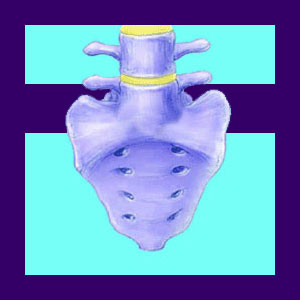
Sacralization is a term used to describe the natural and sometimes congenital fusion of the last lumbar vertebra with the first sacral vertebra. In most patients this will entail L5 being joined with S1, although in rare cases of an extra transitional vertebra, it may be the atypical L6 joined with S1.
Natural sacral fusions have been researched exhaustively and have not been found to be inherently painful, symptomatic or problematic in any way when they occur due to idiopathic congenital reasons. In cases where fusion is developed due to spinal degeneration, the potential for symptoms increases, but is certainly not guaranteed.
This discussion focuses on organic developed or congenital lumbosacral fusions and their effects on the spinal anatomy.
What is Sacralization?
Lumbosacral fusion, in its congenital form, is relatively common and is not usually a cause for any worry. Many patients with a fused lumbosacral junction have back pain, which is no surprise, since up to 85% of the general population demonstrates symptoms at some point in life. However, many people with a fused lumbosacral juncture have no pain or unrelated pain in another region of the spine, such as the neck.
Clinical findings have shown no correlation between these congenital fusions and any incidence of lower back pain. This condition involves a missing or purely cosmetic lumbosacral intervertebral disc, so that the sacrum is effectively enlarged upward by one vertebral level.
In cases where the condition is developed, symptoms may be possible, especially if the fusion is not a good fit, not complete or if nerve impingement occurs. These circumstances should be evaluated by a spinal neurologist/orthopedist team and must be handled on a case by case basis. Read more about a sacralized vertebra.

Causes of Lumbosacral Fusion
The vast majority of people affected by this spinal abnormality are born with it. There is no known reason why it occurs, although genetics may play an important role in its development.
Less common reasons for a fused lumbosacral region include traumatic back injury, extreme arthritic changes and of course, purposeful spinal fusion surgery. In non-congenital cases of fused vertebrae, back pain is more common and may be severe. However, the link between the actual fusion and the pain is often not directly proven, since various other factors may be involved.
It is crucial to remember that virtually any theorized cause of pain may simply be coincidental and innocent in reality. Research demonstrates this law for a host of back pain scapegoats which consist of structural abnormalities blamed for enacting symptoms, but not truly responsible.
Sacralization Guidance
Medical science loves to blame back pain on any structural irregularity in the spine. Patients with a wide range of innocent spinal issues have suffered with the weight of the nocebo effect due to care providers mistakenly guessing that pain resulted from perfectly innocent atypical spinal anatomies or worse, doctors who used these irregularities as an excuse for a financial payday.
Finally, it is becoming common knowledge that many of these issues are often nothing more than scapegoats for back pain and not causative reasons unto themselves. Hopefully, this will prevent opportunistic medical professionals from taking advantage of patients with unnecessary treatments and even needless surgeries.
This is not to say that some cases of sacralized vertebral bones are not problematic. Some truly are. As suggested earlier, be sure to get expert opinions on your case from specialists in the field. Going to a general orthopedist or worse yet, a primary care physician, may not be the best idea for such a debatable and subjective condition.