
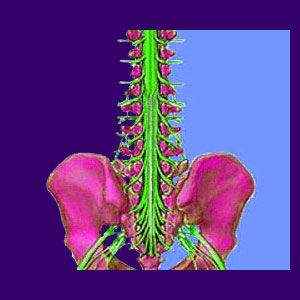
The sacroiliac joint, also commonly known as the SI joint, is a super strong joint that connects the sacrum to the ilium of the pelvis. The joint is surrounded by the anterior and posterior sacroiliac ligaments that bind the bones together. Parts of the posterior ligament are so strong that the pelvis will shatter before they will tear. This is testament to the durability of the joint. There are bilateral aspects of the sacroiliac, one on each side of the spinal column. Patients may demonstrate pain and neurological symptoms unilaterally or bilaterally, depending on very case-specific criteria and the underlying causative process responsible for generating discomfort.
This dialog provides an overview of the anatomy of the SI joint, as well as discusses why pain might be linked to sacroiliac injury or degeneration.
Sacroiliac Joint Pain
The SI joint is one of the strongest in the human anatomy and bears the weight of the entire upper body. There are 2 distinct variations on pain in the SI joint:
Sacroiliitis is an inflammatory condition that affects the sacroiliac region. It is often related to arthritic changes in the body and can produce serious pain and even functional disability within the actual joint structure.
Sacroiliac joint dysfunction is a far more common type of SI pain. This condition describes abnormal joint movement which can cause excessive tightness or laxity in the actual SI joint. This is a soft tissue pathology, not one of joint deterioration.

Sacroiliac Diagnosis
The diagnosis of SI dysfunction is often made due to severe chronic lower back and sciatic nerve pain, yet absence of some causative spinal abnormality. Patients with this clinical situation are often tested for SI joint dysfunction using the Stork Test. This is a manual manipulation and examination of the SI joint, performed by a doctor trained in diagnosing sacroiliac problems. This test will usually either lead to the diagnosis of SI joint dysfunction or possibly further testing resulting in the diagnosis of piriformis syndrome.
Diagnosis is often attempted or confirmed by an injection of anesthetic directly into the painful area of the SI joint. If the discomfort goes away, the doctor will consider the SI joint to be the cause of pain and go about designing a proper sacroiliac treatment program.
Sacroiliac Joint Anatomy
This is a very “in vogue” region for diagnosing pain in recent years. Millions of years of evolution designed a joint that is so strong and almost indestructible, yet in the last 2 decades, diagnosis of SI joint problems has reached all time highs. It is amazing how medicine can always find a new area on which to blame unresolved back pain.
The majority of all SI patients have been treated for some other form of back pain in the past. When these treatments did not cure their suffering, the original back pain diagnosis was revised and SI joint pain was pronounced.

It is obvious to many who study dorsalgia treatment that the majority of sacroiliac diagnoses have little merit. Just like in many other back ache conditions, symptoms are often blamed on degenerative processes which are inherent to the human condition and have been deemed generally asymptotic in mild to moderate forms.
If your diagnosis of SI pain is blamed on what amounts to normal joint deterioration, or theorized ligament damage due to unspecified injury, then you might be best served by seeking out a new diagnostic opinion.