
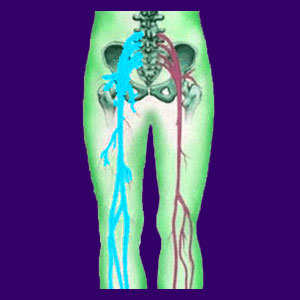
The sciatic nerve is the largest nerve structure in the body. This nerve is responsible for providing sensory and motor function for virtually the entire lower body region. The sciatic is also sometimes called the ischiatic nerve. The sciatic is actually 2 nerves, since it has both left and right branches serving each leg independently. Although this is a large and robust neurological structure, the sciatic also has the distinction of being the single most problematic nerve in the entire human body. Worse still, the various conditions which affect the sciatic can cause debilitating pain and neurological dysfunction which rarely responds well to even the most drastic treatments.
This essay details the anatomy of the sciatic structure, as well as provides some crucial details for anyone who has sciatica symptoms.
Sciatic Nerve Anatomy
The sciatic is formed from nerve roots at 5 vertebral levels in the lower back, including L4, L5, S1, S2 and S3. Three of these nerve roots (L4, L5 and S1) are among the most commonly implicated in a variety of radiculopathy conditions due to the high incidence of degenerative disc disease, herniated discs and osteoarthritis at these same spinal levels.
The sciatic contains different types of nerve tissue, including fibers which manage motor function, as well as fibers which control sensory perception. The sciatic branches out to form a complicated peripheral nerve network which serves the neurological needs of the lower limbs.

Sciatic Nerve Pain Syndromes
Sciatica is the most common diagnosis associated with this much maligned nerve. Sciatica describes radiating pain, tingling, numbness or weakness in the lower back, buttocks and legs. It is perhaps the most common of all chronic back pain syndromes and also one of the hardest to cure.
Pseudosciatica is a diagnosis given to sciatica-like symptoms which are not caused by a spinal source. The most often diagnosed versions of this condition include sacroiliac joint pain and piriformis syndrome.
Unfortunately, one of the more common conditions affecting the sciatic is rarely correctly diagnosed. This condition is simple ischemia, which can enact debilitating symptoms through the process of oxygen deprivation. It is crucial to understand that all cells require oxygen to perform properly and nerve fibers are the most sensitive of all anatomical cells when it comes to the effects of ischemia. Even low levels of oxygen reduction can cause the nerve to lose its ability to effectively transmit accurate messages between the body and the brain.
Sciatica Problems
Many people with sciatica write to me saying that their ischiatic nerve is being pinched by a herniated disc or bone spur. This is anatomically impossible, but is an understandable mistake, since most doctors never take the time to adequately explain what is actually occurring during the diagnostic process. Personally, I have had at least 2 chiropractors tell me that my herniated discs at L4/L5 and L5/S1 were compressing my sciatic. What these doctors mean is that one of the nerve roots which eventually grow together to form this largest of nerves is being impinged upon.

However, the reality of the situation rarely mirrors the diagnosis. Pinched nerves are diagnosed far more often than they truly occur and some are simply theorized scapegoats on which sciatica symptoms are blamed.
If you are having ongoing concerns involving this nerve, I recommend seeking evaluation by a trained spinal neurologist. Since these physicians are focused on the spinal nerve structures, they will be best able to accurately diagnose any problems affecting this largest of all bodily nerves.