
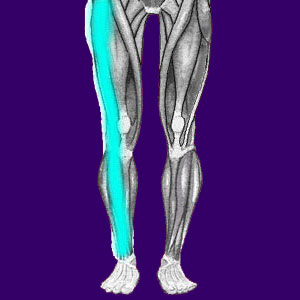
Short leg syndrome is a condition that is actually quite clear from its name alone. All versions will involve different leg lengths when measured from left to right. It must be noted right from the start that short leg syndrome comes in 2 completely different and distinctive types of diagnosis:
The first details a condition in which the actual leg bones are of different lengths or may entail a structural concern with the placement or proximity of the hip socket. This is known as anatomical or structural short leg. This is the type most identified and treated by orthopedists and physical therapists.
The other type is called functional short leg. This is the variety focused upon by chiropractic practitioners more than any other kind of care provider. In this scenario, the patients anatomy is perfectly (or close to perfectly) symmetrical, but the legs may be or appear different lengths due to some non-skeletal issue, including postural concerns and soft tissue pathologies.
Both varieties of short leg are relatively common and can result from many possible causes. Most mild to moderate cases are not problematic and do not produce any pain. Some patients with severe and extreme SLS can indeed suffer symptoms, although these case profiles are rare. Far more typical is the misdiagnosis of minor (or even fabricated) SLS when the condition is actually innocent (or nonexistent) and coincidental to any painful complaint.
This resource section provides a complete and objective look at the 2 distinct short leg diagnoses.
What is Short Leg Syndrome?
SLS is simply a condition in which one leg is, or appears to be, shorter than the other. This is thought to create pain by placing abnormal and excessive stress on the hip, knee, spine, sacroiliac joint and surrounding musculature.
According to most back care professionals who diagnose SLS, the spinal anatomy is designed to bear weight evenly, left to right. In cases where one leg is not holding up an equal percentage of bodily weight and circumstantial stresses, abnormal force is applied to the skeleton, potentially creating unilateral focal overuse and muscle imbalance conditions. This applies regardless of whether the patient has been diagnosed with anatomical short leg or functional short leg.

Anatomical Short Leg Syndrome
Anatomical SLS is also called structural SLS. This condition is characterized by a noticeable skeletal discrepancy in leg length between left and right. The condition might be slight and only noticeable on x-ray films or may be drastic and obvious to the naked eye.
The most common causes of structural SLS include a past history of serious leg fractures, a congenital defect, knee joint problems and hip problems. This type of short leg can not typically be reversed using spinal manipulation therapy and is typically treated using shoe insert orthotics. Ironically, even the most obvious anatomical SLS conditions are statistically less likely to cause pain than functional SLS cases.
Learn more about different leg lengths.
Functional Short Leg Syndrome
Functional SLS is a common scapegoat on which chronic back pain is often blamed. Chiropractors are famous for making this diagnosis and will often comment to their patient how one leg is shorter than another. Functional SLS is often blamed on posture, unequal weight distribution or sacroiliac concerns. Of course the usual vertebral subluxations are also a typical explanative theory. Far more often, there is no actual problem and the diagnosis is simply an excuse for treatment.
Personally, I was diagnosed with functional SLS throughout my chiropractic treatment and never bought into this diagnostic conclusion. On any given day, I could go to my chiropractor and receive the diagnosis. I would get a spinal adjustment and the chiropractor would say it was resolved. Just for kicks, I would sometimes get checked by one chiropractor right after another adjusted me, in the same office, without even leaving the table. Sure enough, functional SLS again, and sometimes on the other leg. It was laughable!
This is not to say that the condition does not exist. Certainly some people do have definitive soft tissue conditions which can and do source functional short leg syndrome. However, these represent a small minority of the patients whose pain is blamed on what seems to be a complete non-issue.
Remember the body is very adaptive and it is highly unlikely that a minuscule amount of leg length discrepancy, which may vary from moment to moment, will cause the type of serious and agonizing pain syndromes blamed upon it.
Read all about unequal leg length.

Is Short Leg Syndrome a Problem?
Those of you with anatomical SLS are most likely aware of the leg length discrepancy and probably have functioned quite well, despite the condition. Those of you with a significant leg length concern might have had some pain and a tough time functionally.
Most of you struggling with functional SLS are probably wasting your time chasing shadows. Your doctor might be trying their best to help you, but maybe they are simply on the wrong track. I have yet to meet anyone who was diagnosed with this condition and ever found a permanent cure using manual adjustment therapy. If you are the one, I would love to hear your story.
Our proprietary pain relief program can not change different leg lengths, but it is wonderfully effective for relieving the symptoms of short leg syndrome.