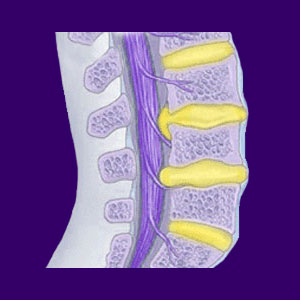
A slipped disc is a colloquial slang term for a herniated disc. The name of this condition is misleading, since it implies that the disc has moved out of place in the spine. This is not the case, since the disc is firmly anchored to the vertebrae above and below by cartilaginous end plates. What the condition actually refers to is a herniation of the interior nucleus pulposus, not a complete movement of the disc structure.
A slipped disc can be caused by several different circumstances. It can occur suddenly or over an extended period of time. Herniations can be injurious events or rather gentle processes which go completely unnoticed. Most herniations do not cause any pain or neurological effects, but some may.
The scope of this article will examine the physical causes of herniated discs in the spine, as well as clarify the slipped intervertebral disc misnomer.
Causes of a Slipped Disc
A common cause of disc pain is sudden trauma due to a back injury. Falls on the lower back, especially when landing in a sitting position, have a good chance of causing a disc protrusion. Car accidents can also cause a disc injury in the lower back or neck. Any great force that is applied to the spine can cause a disc to bulge or rupture.
Herniated discs can result from such normal activities as lifting a heavy object. This is especially true if you lift with a bent back.
Sports are a contributing factor to causing herniated discs, either due to injury or repetitive wear and tear followed by subsequent degeneration.
Any repetitive strain that puts stress on the back is creating the right scenario for a disc injury to occur.
Another usual cause for herniated discs is simple degeneration or wear and tear. This occurs mainly in the lower back and neck areas of the spine, since they are the regions that must bend and flex the most.

Studies have shown that smoking can erode the disc material. Smokers are more likely to suffer a herniated or degenerated disc as a result.
Finally, obesity also factors in to the cause of a herniated disc. Overweight people put more stress on their spines than thinner people. This stress can cause a bulging disc due to increased spinal pressure. Remember physical science in school?
Force = Mass x Acceleration
More mass = more force
Understanding Slipped or Bulging Discs
Regardless of the cause of a herniated disc, the condition does not usually cause pain. Many people are walking around with herniated discs right now and do not even know it. I have 12 of them in my spine and many seem quite innocent, although in my case, some may be problematic.
Do not let a diagnosis of herniated disc scare you into a painful state. If you did not experience pain before you learned about your herniated disc, then you should not expect to feel pain after the diagnosis.
To summarize this discussion, herniations have been shown to be basically normal spinal changes found in the low back and neck of most adults. Unless caused by dire trauma, most herniations do not cause symptoms. Remember, discs themselves do not feel pain. The only ways symptoms can be produced is if the disc protrusion somehow influences a nearly neurological structure through direct compression or chemical irritation. Most importantly you must remember that discs do not slip. They might bulge, prolapse or extrude, but they stay exactly where they were meant to be; in between the vertebral bones.