
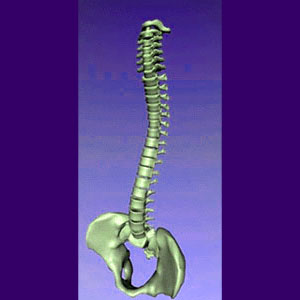
Spinal fusion is also known as spondylodesis or spondylosyndesis and is a type of arthodesis operation. Fusion is a back surgery procedure commonly used to treat a wide variety of spinal conditions, often without logical merit.
During spinal fusion surgery, 2 or more vertebral levels are surgically bonded together, creating one solid piece of bone where 2 or more individual vertebrae previously existed. This procedure prevents individual movement in the treated spinal levels which is contrary to the basic natural design of the spine.
Of all the surgical techniques used in the dorsopathy sector, spinal fusion is the most ill conceived, inappropriately utilized and abused of all procedures. Sure, in very rare instances, fusion might be the only treatment which might help to solve a dire spinal issue, but for the vast majority of patients who undergo the operation, this is simply not the case.
Let’s take a deeper look at spondylodesis procedures and determine why they are so widely utilized, despite their horrible risks and generally disappointing outcomes for providing pain relief.
Spinal Fusion Procedure
Fusion is the most invasive and complicated back surgery procedure possible. First the surgeon will make either one large incision (in traditional full open versions) or several smaller incisions, (in minimally invasive versions). Once the spine can be accessed, the the first step is to address the discs which currently act as vertebral spacers. The intervertebral discs are usually completely removed from the proposed treatment levels.
Vertebral bones are joined with bone grafts which can be harvested from the patient themselves or may consist of donor tissue from a cadaver. The fusion is often reinforced with connecting metal hardware, such as cages, screws, rods, pins, plates and bolts. Sometimes, a spinal implant is used in conjunction with a traditional fusion.
Over time, the bone grafts will hopefully grow and help solidify the fusion for the remainder of the patient’s life. Surgical hardware is sometimes removed after the bone grafts heal or is sometimes left in place forever. The incidence of complications after operations which utilize hardware is very high, regardless of whether it is removed or left in place.
Orthotic back braces are usually employed after surgery to limit movement in the operated levels during the healing process. Patients will require extensive rehabilitative therapy and will be greatly limited in physical functionality for months. Full healing usually takes up to 1 year or more to complete and that is if everything goes well, which it often does not.

Indications for Spinal Fusion
Fusion is one of the few treatment options for such conditions as severe scoliosis or extreme kyphosis or lordosis. It is also an appropriate treatment for victims of terrible trauma who require immediate surgical stabilization of the spine in order to save their lives.
Certain other less common conditions can also be treated justifiably using a fusion procedure. Even in these above cases, the condition must be exceptional to warrant a fusion. The best examples are when the spinal curvature is so severe that the person is suffering organ damage or the threat of death. In cases of spondylolisthesis, the vertebral slippage would have to be grade 3 or 4 for a fusion to be worth the risks.
Using a fusion surgery to correct a normal spinal condition, such as a degenerated or herniated disc, is ridiculous. This procedure has shown very poor statistics for relieving pain in these instances and a high rate of complications experienced in surrounding spinal levels.
Patients undergoing a fusion for disc or spinal arthritis pain conditions usually wind up being subjected to multiple surgeries and endure a downward spiral of functionality.
Vertebral Fusion Contraindications
Using a fusion procedure for any spinal condition should be the last resort in all circumstances. Fusions go against the natural design of the spine and are hellish to endure. The spine is not a structure which can be treated in a limited area, since all vertebral levels are connected.
Fusion in one area will place inordinate stress on surrounding vertebral levels. This creates a domino effect of pain, dysfunction and disease throughout the spine, which will ensure follow-up surgical treatments. Patients are rarely informed of this aspect of the operation prior to surgery.
A fusion should not be used if there is any other conceivable way to treat the condition. If vertebral surgery is the only way to proceed, the patient should consider an artificial disc replacement surgery instead of a fusion, if this procedure is appropriate. Although this is a newer and less tested procedure, it does maintain spinal flexibility which is key to recovering normal usage after the operation.
Failed back surgery syndrome is an epidemic among postoperative fusion recipients. This devastating condition is the unfortunate result of premature and inappropriate fusion procedures and often leads to permanent disability and continuing pain for life.
Of all the spinal procedures which fail, fusion is the hardest to correct and undo the horrific structural trauma caused by the surgery. In cases where the patient did not have a horribly deformed spine prior to the fusion technique, they certainly will afterwards.
Spinal Fusion Opinions
I understand that this procedure does have its (very limited) uses. I am not saying it is completely worthless. What I am saying is that I have seen the horrors it has produced in literally thousands of patients I have met face to face and tens of thousands who have written to me.

The tales of torture from multiple fusion operations and the horrible final results leading to permanent disability have made me sick. So many patients have been subjected to the agony of vertebral fusion for nothing. Most patients could and should have been treated non-surgically. Many did not even suffer from pain due to their diagnosed condition.
I can’t begin to tell you how many patients have written to me with such sad, but true stories of their spinal fusion experiences. Far too many have lost the majority of their physical functionality and still have pain. It is a crime and their doctors should be held accountable.
Please, if a fusion has been advised to treat your back pain, think twice before agreeing. If you have already endured the operation, please let me know how it worked out for you.
Many patients do enjoy good short term results for pain relief after fusion. They usually single themselves out as the exception to the rule of problems, but this can be premature. In my studies, many of these patients end up right back on the operating table for more fusions in a matter of years, as degeneration runs wild in their spine.
Before you judge yourself to be a success, wait and see… I will hope for the best outcome for you.