
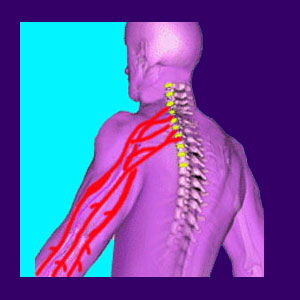
Spinal nerves are formed from the joining of the nerve roots. The dorsal and ventral nerve roots grow together to create a nerve structure comprised of mixed tissue types. Nerves are typically bundles of several different varieties of neurological tissue, each with its own unique properties. Specific parts of the nerve control different functions in the corresponding anatomical region served by the neurological structure.
These vital nerves branch off throughout the body to create a huge network of neurological tissues, both large and small. In some instances, spinal nerves grow together to form larger nerve, such as in the case of the sciatic nerve. In other cases, they split up to form a seemingly endless number of smaller nerves.
This article examines the role of the spinal neurological tissues in pain generation and symptomatic transmission.
Types of Spinal Nerves
There are 8 sets of cervical nerves which exit the spinal canal between each cervical vertebra. These nerves will serve the neurological needs of much of the upper body, including parts of the head, neck, shoulders, arms and hands.
There are 12 sets of thoracic nerves which exit the spine between each thoracic vertebra. These nerves serve the trunk of the body, including the frontal and rear torso and abdominal regions.
There are 5 sets of lumbar nerves which branch off the cauda equina in between each lumbar vertebra. These serve parts of the pelvis, buttocks, hips, legs and feet.
There are 5 sets of sacral nerves which branch off the cauda equina in the sacrum. These serve the genitals, anus and parts of the legs and feet.

There is a single pair of coccygeal nerves at the base of the spine.
When added together, the neurological functionality of all of these nerves serves the vast majority of the sensory, motor and autonomic functions throughout the body.
Varieties of Nerves in the Spine
Nerve tissue comes in 3 basic varieties: motor, sensory and autonomic. Large nerves, such as the spinal variety, are typically made up of all three types of neurological fibers grouped together.
Motor nerves control muscular movement in their respective bodily locations. A motor dysfunction will prevent a set of muscles from being activated to their full potential or in totality.
Sensory nerves control feeling, sensation and stimuli experienced in their respective bodily locations. Dysfunction will produce unusual sensations, such as pain, or a complete lack of sensation, such as objective numbness.
Autonomic nerves manage autonomic processes which are not consciously controlled. Autonomic nerve damage can have severe effects in many areas of the body, including blood pressure concerns, digestive problems, internal organ failure and death.
Spinal Nerve Problems
Nerve compression can be a major health crisis for any affected patient. Compression prevents proper nerve signal transmission and can cause a variety of symptoms ranging from pain to numbness, tingling and weakness. However, pinched nerves do not occur nearly as often as they are diagnosed. Symptomatic correlation often points out serious discrepancies in the actual expression versus the clinical expectation.
Ischemic processes can also create a similar symptomology as physical compression. Luckily, ischemia does not do any permanent damage and can usually be treated effectively, as long as the condition is recognized as being an oxygen deprivation issue and not a structural impingement process.