
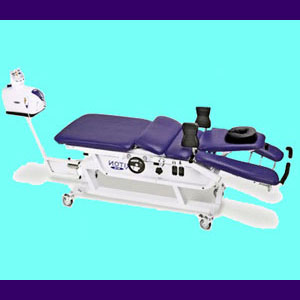
Traditional, bedridden spinal traction is an antiquated back pain treatment which is rarely used any more, due to its ineffectiveness and utterly illogical presumptions. Traction is however, the precursor of modern spinal decompression, so it has served some valuable function within the back pain industry.
For practitioners who still use bed-ridden traction for symptomatic pain relief, shame on you! Get with the program doc, it is the 21st century already! Unfortunately, we do see this treatment still being used in many countries with less developed and enlightened medical infrastructures. There are also a handful of very rare circumstances involving extreme spinal curvature, postoperative spinal issues and dire back injury which still may warrant periods of traction to this day.
This discussion focuses on the pros and cons of spinal traction in a variety of treatment applications.
What is Spinal Traction?
Traction is described as placing the patient in bed for an extended time frame and using clumsy manually controlled weights to place regulated tension on the spine. Typically, patients are fitted with harnesses or bindings which facilitate placement of weight on specific areas of the body. This is done in an effort to elongate the spine, theoretically enacting a Stone Age version of decompression treatment.
Traction for back pain has been used for literally thousands of years, but modern medicine has determined that it is not only ineffective as a curative therapy, but actually does more harm than good for the vast majority of patients. Unfortunately, this change of medical opinion has only come in the last few decades… too late for the millions who suffered this fate for years before.

Spine Traction Complications
In addition to typically not actually helping to decompress anything, bedridden traction also is responsible for considerable negative effects on the body and mind:
Patients who are confined to bed suffer muscular atrophy, which is a prime source of back pain perpetuation. Patients may also suffer irritation and sores from being placed in a stagnant position for a ridiculously long time.
Blood circulation is greatly reduced in the affected area, which slows the healing process for actual back injuries and worsens common ischemic pain syndromes.
Traction can cause various types of blood clots, can alter blood pressure and can cause emotional effects, such as depression.
While traction is still indicated for certain specific severe injuries, it is not to be used as a symptomatic treatment option for common back pain.
Bedridden Traction Summation
Instead of wasting your time even considering this outdated therapeutic idea for back pain relief, it may be wise to investigate modern nonsurgical spinal decompression. This therapy is fast, effective and allows you to overcome many painful spinal conditions without much disruption in your lifestyle. Decompression has become one of the most promising treatment options for actual cases of structural back pain caused by herniated discs, degenerative disc disease and some forms of facet syndrome and foraminal stenosis.
Patients who are advised to remain bedridden for weeks or months should insist on a second opinion. In most cases, these prescriptions will not be necessary and avoiding traction will likely help the patient to recuperate faster and more completely. To learn more about alternative therapy options, consult with an enlightened physician or physical therapist.