
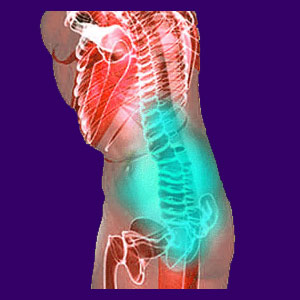
Significant spondylolisthesis pain is a rare occurrence and is almost always generated by grade 3 or grade 4 versions of vertebral displacement. Spondylolisthesis is a condition that can be congenital or developed during life through degenerative changes or traumatic back injury. It is not normally a symptomatic condition in its milder forms and specialized treatment is usually not necessary.
Spondylolisthesis is one of the conditions which is difficult to generalize about since statistics show minor cases to be blamed mistakenly for causing pain in many patients. Meanwhile, there is another root cause of pain that eludes discovery while treatment of the vertebral slippage ensues. In these circumstances, it should be no surprise that therapy results are typically abysmal. On the other hand, severe cases of spondylolisthesis can be terribly painful and neurologically debilitating. This is often seen when slippage reaches over 75%. It should be noted that the majority of diagnosed patients have misalignment rated at 10% or under.
This dialog seeks to solve the puzzle of pain linked to vertebral misalignment.
Spondylolisthesis Pain Nocebo
Many patients live for years or even decades with a spondylolisthesis condition without even knowing that it exists. The condition does not usually demonstrate any signs that can be detected without some form of diagnostic imaging study of the affected area of the spine. Often, the condition is discovered during an imaging test done for a completely unrelated reason.
Although pain may have never been present, when the patient discovers that one of their vertebrae is out of alignment, they typically see a doctor. This doctor often scares the patient into believing that this condition will cause them pain or potential disability, even though it may never have before. This diagnostic nocebo effect can be strong enough to begin the start of a pain syndrome when no symptoms existed in the past.

If pain has been experienced, the spondylolisthesis may actually be the source in severe cases, but may be coincidental in many other instances. Hopefully the patient will seek out qualified symptomatic correlation with a spinal neurologist in order to reduce their chances of being misdiagnosed.
Psychogenic Spondylolisthesis Symptoms
Many cases of treatment-resistant and ongoing back pain are caused by a psychological process. Affected patients are often characterized as having persistent pain which is blamed on some coincidental scapegoat condition.
Spondylolisthesis is one of those common spinal abnormalities that are diagnosed as being the cause of pain, when the actual causative process is psychological. It is no surprise that treatment for these individuals is usually a dismal failure and the patient in left with an ever-increasing symptom imperative and sense of dread.
It is vital to understand that mindbody pain conditions are universal in our society. The pain is completely real and no less affective than purely anatomically-motivated sufferings. Patients who consider the idea that they may be suffering from a mindbody health issue should be praised, not condemned.
After all, they have learned enough about life to understand that the human body is interconnected to the mind in every way. Furthermore, they can feel better knowing that medical research clearly shows little link between the incidence of grade 1 or 2 spondy and the occurrence of any back or neck pain.

Suggestions for Coping with Spondylolisthesis Pain
If you have been diagnosed with a spondylolisthesis-related pain syndrome and have not found relief through the recommended treatments, consider the possibility that your pain has been misdiagnosed. Sure, you might indeed have spondylolisthesis, but the vertebral slippage might not be the source of your pain. Statistics demonstrate that mild versions of spinal displacement rarely are the actual causes of agony in millions of diagnosed patients worldwide.
It is very important to remember that back pain is a widespread problem, but does not necessarily correlate to common structural explanations used to justify treatment. It would be great if all the usual suspect diagnoses were the actual sources of pain, since the chances of finding a cure would be so much better. However, medical science tells us that most structural abnormalities, including minor spondy, are rarely to blame for our chronic misery.