
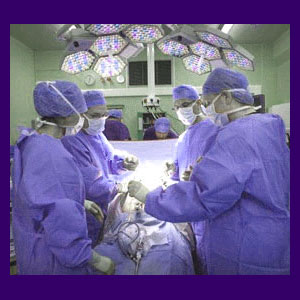
Spondylolisthesis surgery is a drastic and invasive therapy option for advanced vertebral slippage conditions. Spondylolisthesis is a condition with multiple possible causes, but similar symptomatic profiles. While most minor varieties of the condition are not problematic, some can cause moderate pain and related symptoms and others can create truly nightmarish cases of suffering and even spinal instability. It is in these cases that back surgery is usually prescribed as the best or only treatment modality available.
It is a sad fact that even when surgery is indicated and truly needed, the curative results are not promising. This is because the approach utilized is chock full of perils for the patient, both immediately and over the long-term outlook on recovery, rehabilitation and the possibility of returning to a normal life.
This discussion focuses on surgical treatments for vertebral migration.
Spondylolisthesis Surgery Procedures
Surgical correction of severely slipped vertebrae is a last resort treatment option. The operations are very invasive and can create many associated health problems.
The most common procedure used is one of the many varieties of spinal fusion, sometimes in combination with other techniques, such as laminectomy.
Fusion is an operation where the vertebrae are joined together using bone grafts and surgical hardware, such as cages, screws, pins and plates. In severe cases of spondylolisthesis, this hardware is often left attached to the operated vertebrae permanently, as a means of reinforcing the fusion procedure against a recurrence of slippage.
Fusion is a traumatic operation to endure and can cause degenerative conditions to develop in other surrounding vertebral levels. Spinal fusion should only be considered if there are truly severe symptoms and no other conservative back pain treatment options available. If a fusion procedure is warranted, make sure to find a specialist who can ensure the best results possible for your particular condition. Additionally, try to undergo the least invasive version of the technique possible, as long as the procedure can still satisfy the surgical goals.

Unnecessary Spondylolisthesis Surgery
Many patients with mild to moderate spondylolisthesis have endured unnecessary back surgery to correct an asymptomatic variety of vertebral displacement. Mild to moderate cases of spondy are statistically proven to rarely cause pain or related neurological symptoms and often act as a convincing back pain scapegoat on which to blame suffering enacted by a completely different causation.
Before undergoing any surgical procedure for your unresolved back pain caused by spondylolisthesis, make absolutely sure that the diagnosis is valid. Your neurologist should prove very useful during this process, so be sure to include them in the verification process. Words of wisdom tell that if surgery has been recommended for grade 1 or 2 spondylolisthesis, yet a variety of conservative care methods failed to bring relief, an operation has poor chances of resolving the pain either. Grade 3 or 4 are completely different stories altogether.
Surgery for Spondylolisthesis
While I am usually very anti-surgery, I do recognize that many patients have advanced forms of vertebral migration which require some drastic help. Surgery is truly needed in many of these severe vertebral misalignment conditions.
Patients with more common and less severe conditions should not even be considering surgery except in extremely rare instances of obvious pinched nerves or cauda equina syndrome which may result from a combination of spondylolisthesis and some other spinal issue.

Pain due to mild or moderate spondylolisthesis is often misdiagnosed and may actually be coming from some other physical or psychoemotional source. Your doctor is not likely to inform you of the epidemic proportion of psychosomatic pain syndromes, so it is knowledge that you must learn for yourself.
Do everything possible to ensure that if you do require surgery, at least it will result in an enduring pain-free condition. There is truly nothing worse than undergoing an extremely invasive surgical vertebral correction only to have continuing or even exacerbated postoperative pain. Not only does this happen, but when it comes to spinal fusion, it happens very often.