
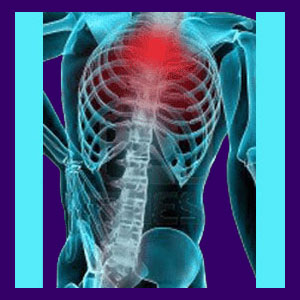
A thoracic spinal cord injury is typically more serious than a lumbar cord injury, yet not as bad as cervical spinal cord trauma. Injury to the thoracic spinal cord is likely to produce neurological effects in the lower body and torso. As with all spinal cord injuries, the higher the level of cord damage, the more serious the symptomatic profile will typically be.
The thoracic spine demonstrates the best natural defense against traumatic injury, since the spinal cord is well protected by large and strong vertebrae which do not suffer the same degree of degeneration as the upper and lower ends of the backbone. However, spinal cord damage caused by disease is still almost as prevalent in the thoracic area as in other regions.
This essay details thoracic cord trauma and disease and the resulting dysfunction produced in the anatomy.
Thoracic Spinal Cord Injury Truths
The thoracic vertebrae are very strong and protective. This makes cord injury in the thoracic region less common than in the neck or lower back. Most cases of thoracic cord damage are due to tumorous growth, congenital or developmental condition or gunshot wounds.
Falls, sports injuries and car accidents are less likely to produce cord injury in the middle back than in the other more delicate spinal regions. However, this is far from an absolute, since some thoracic cord injury patients do suffer from these types of traumas.
Complete spinal cord injuries will take away the abilities to feel and move below the affected vertebral level. No neurological messages will get past the damaged part of the spinal cord.
Meanwhile, partial spinal cord injuries will only reduce nerve signal to the affected areas and might spare some of the motor and sensory capabilities of the lower body. Incomplete cord injury can range from mild to extreme, so each case profile is different.

Middle Back Spinal Cord Injury
Complete thoracic injury will result in a paraplegic condition. Affected patients will not have motor use or feeling in their legs and will also suffer loss of bladder and bowel control. Higher thoracic injuries will progressively affect internal organ process and might cause some serious health effects in many patients.
Incomplete cord damage will have different effects in every patient, with some suffering a reduction in movement and others in sensation. A great number of patients endure reductions in both aspects of nerve functionality, but not to the degree of a complete injury. Basically, this means that some nerve signals are still functioning correctly, but some are not. Statistically, these incomplete cases respond better to rehabilitative therapies.
Sexual dysfunction is a big problem for many patients with severe thoracic cord injuries. The highest levels of thoracic injury can even influence the movement and sensory capabilities in the arms to some degree.
Thoracic Spinal Cord Injury Conclusions
It is crucial for patients with any spinal cord injuries to maintain their health and go for adequate preventative medical care. Cord injury lowers the efficiency of the immune system and leaves the patient open to attack from infection and disease. Poor circulation compounds this problem and can create serious health complications for every individual.
Although cord injury care has improved greatly over the past few decades, there have been virtually no big breakthroughs in medical treatment of spinal cord damage. Stem cell research has shown potential as being a real glimmer of hope, but has been mired down in political and ethical controversy for years. Meanwhile, millions of suffering people wait patiently for some measure of relief.
Back Pain > Spinal Cord Injury > Thoracic Spinal Cord Injury