
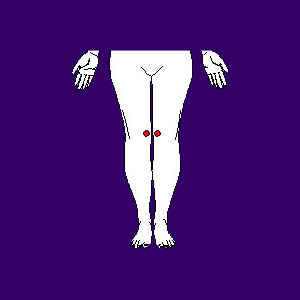
Knee pain is a typical result of many traumatic injuries to the joint itself, but is also very common psychosomatic pain syndrome suffered by countless patients. Many people experience pain in one or both knees as either their main health complaint or a secondary symptomatic condition. The knee is also a typical location for a wide variety of diagnosed structural pain conditions that are theorized to be enacted by degeneration or overuse. The knee structure has long been vilified by the medical community as a location often plagued by treatment-defiant symptoms and recurrent injuries.
The reality for many patients is that the knee is simply yet another bodily region which is greatly misunderstood by the medical community. Sure, injury and degeneration exist, but they also usually respond well to indicated care. When knee pain symptoms do not resolve, the source of pain may be the mindbody processes instead of any coincidental structural alteration of the joint or soft tissues. This article examines this very real occurrence in the modern orthopedic community.
Psychogenic Knee Pain
Although many patients suffer from painful knees blamed on one of the above structural conditions, the diagnosis is often incorrect. Some ligament and joint injuries are not inherently troublesome and will resolve all by themselves.
Some patients with long-term knee symptoms, which have not responded well to appropriate medical treatment, have certainly been misdiagnosed. Many of these patients are most likely suffering from ischemia-related pain in their knees which has been blamed on some scapegoat structural condition. This helps to explain why so many patients with chronic pain in the knees never fully recover. Meanwhile, it also provides strong evidence of the innocent nature of many joint abnormalities, since many people demonstrate the structural changes associated with aging in the knees, yet have no pain at all.

Diagnosis of Knee Pain
The knee is a site which can suffer from several diagnosed injuries or degenerative conditions. The most common diagnoses of physical knee problems include:
Torn or injured ACL (anterior cruciate ligament)
Torn or injured meniscus
Torn or injured MCL (medial collateral ligament)
Kneecap (patella) injury
Fluid accumulation in the knee joint
Most of these conditions are the result of trauma, often caused by participation in sports or due to some sort of personal injury. Some knee conditions can be the result of the normal or accelerated aging processes in the actual joint. Obesity is a known contributor to knee issues, as well as general negative health consequences.
Treatment of Knee Pain
Conservative treatment for chronic or acute knee symptoms usually consists of the application of various physical therapy modalities. Dietary changes are sometimes also employed, such as the addition of glucosamine and chondroitin, which might help to improve joint function. Some patients might choose to use chiropractic as a primary conservative course of treatment.
Moderate knee treatments usually employ orthotic braces and supports, which may help to stabilize the knee joint during healing. Various injection therapies are also considered for patients with unresponsive symptoms.
Drastic treatment is usually surgical intervention and correction of any suspected problematic condition. Arthroscopic procedures are a huge improvement over traditional open knee surgeries. These minimally invasive techniques have become the industry standard for repairing the majority of knee injuries. Occasionally, fully open surgery is required to correct severe or multiple injuries to the knee joint.
While knee surgery is very commonplace in the medical sector, it does not offer great curative results and may even do permanent damage in some unfortunate instances. Patients are always advised to avoid operative interventions unless they are truly needed.

Painful Knees
I suffered from knee problems for much of my life. As a child and early teen, my knees (especially the right knee) would lock up if I knelt on it a certain way. This was very uncomfortable, but diagnostic tests showed no anatomical reason for the condition to exist. During martial arts training, I tore the meniscus in my right knee, not once, but twice, 3 years apart.
The first time, it healed fine on its own, but the second time, surgery was recommended to fix the problem. By this time, I was well versed in both knee problems and mindbody medicine. I did not think surgery was necessary and managed to rehabilitate the knee on my own. I have never injured it since, many years later.
Knee injury is a very painful and debilitating condition. For patients with actual physical injuries, make sure to investigate treatment options carefully. Patients who suffer from persevering unresolved knee concerns should consider whether they might be suffering from a mindbody pain syndrome, rather than an anatomical structural defect.
The incidence of psychological knee issues is very high and the condition can usually be treated successfully using the same knowledge therapy principles one would use to cure back pain. Best of all, there are no side effects or risks of surgery to endure. The answer to your knee pain condition might very well already be inside your own mind. All you have to do is learn the techniques and apply the knowledge to possibly enact a cure.
Back Pain > Psychologically Induced Pain Syndromes > Knee Pain