
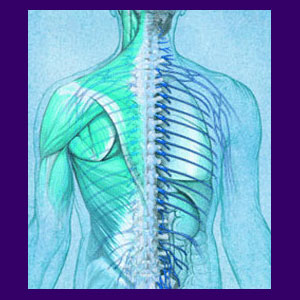
Back muscles are the main components of the soft tissue anatomy of the dorsal region. Muscles work hand in hand with other soft tissues, such as ligaments, tendons and fascia to provide movement to all the parts of the human body. However, the muscles in the back can also be the very structures affected by horrific symptoms; making life a torturous ordeal.
Muscular back pain is the most common symptom in patients with chronic dorsopathy concerns. Acute muscular injuries can be extremely painful, yet they often heal, without formal treatment, in a short period of time. Meanwhile, unresolved chronic muscle pain can set the stage for protracted periods of torment, since these enigmatic syndromes rarely benefit from accurate diagnosis or successful treatment.
This patient guide helps to explain how and why back muscles can be painful, despite their incredible strength and functional capability.
Back Muscle Anatomy
Muscles in the back, neck and buttocks are some of the most important in the body. They are instrumental in controlling posture and locomotion, as well as providing support and structure for our skeletons. Postural muscles work around the clock and have the ability to perform for hours upon end. Muscles in the lower back and buttocks are some of the strongest in the human anatomy.
The anatomy of the back is comprised of multiple layers of deep and superficial muscle. Being that these muscles also help to shape and govern the spine itself, muscular expressions of pain are often linked to spinal causations.
In some instances, linking defective spinal structures and resulting muscular concerns is good medicine, based on factual evidence of a mutual relationship. In many cases, however, this is where the diagnostic process goes completely wrong, when innocent and coincidental spinal irregularities are blamed for causing unrelated muscular symptoms.

Muscular Back Injury
It is possible to overexert a muscle from repeated or constant use. This can cause a build-up of waste products, such as lactic acid, in the muscle fibers. These waste products can cause mild pain, heat and fatigue in the surrounding area.
Muscles and ligaments can also tear to variable degrees. Tiny tears are actually beneficial for muscle, since this is how new muscle tissue is created. This purposeful and controlled injury is the goal of weight training in order to build more muscular mass. This process is mildly uncomfortable for 24 hours or so, but should not actually be painful when done correctly.
More serious muscular tears can also occur and in some particularly bad cases, the muscle might become detached. This type of muscular injury is usually very painful and can cause a deficiency of strength in the affected area. Muscles can also suffer bruising like any other soft tissue in the body. Muscular bruising can be sore, but is rarely serious.
Back Muscle Pain
One of the most prevalent forms of chronic muscular back pain is due to oxygen deprivation of the muscles and nerves in the affected region. This is the same process which can cause symptoms in all types of psychosomatic pain syndromes, including fibromyalgia. This type of pain is often blamed on some coincidental spinal scapegoat condition.
Physical injury due to overexertion should resolve in a few hours to a few days. Moderate to severe muscular injuries might take a few weeks to feel better. When pain endures for months or years, the chances of a structural causation being responsible are virtually zero. In these instances, the patient may benefit by considering nonstructural causative mechanisms which may or may not be related to the mindbody process.

Dorsal Muscle Anatomy
Your back and spine are super strong. Millions of years of evolution have guaranteed that your spinal structures and musculature are more than sufficient to get you through life. Public perception views the back as a fragile structure with a bad reputation for developing chronic pain. This perception has been created by all the factors which have contributed to the current epidemic of back pain.
It is important to have faith that muscular injuries will heal. If not, you are setting yourself up for the start of a possible long-term psychosomatic pain condition that will use the muscle injury as a trigger to begin chronic symptoms. This is the situation seen over and over again in patients with tension myositis syndrome.
Study the anatomy and you will understand why chronic muscle pain rarely makes any sense. Healing is the primary goal of the body and there are few circumstances which will prevent the complete resolution of any muscular injury in life. Very few.
Do not expect to have this factual information voluntarily offered by your local doctor, since treatment of chronic muscle pain is a huge business within the back pain industry.