
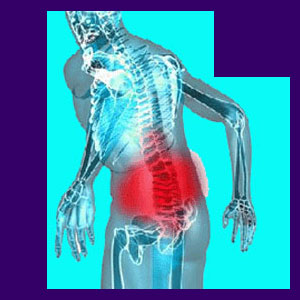
A back pain trigger is an actual or perceived injury that is used to create, perpetuate or aggrandize a symptomatic mindbody pain condition. Psychoemotional back pain is a complicated process which uses several strategies in order to appear convincingly physical in nature.
Most patients who are affected by psychogenic and psychosomatic symptoms suffer from one or more trigger mechanisms which will always enact pain upon occurrence. Some patients endure hundreds, or even thousands, of potential triggers. However, patients with purely physical and structural pain diagnoses may also suffer triggers in the form of activities or positions which set off flare-ups of pain. In essence, a trigger is an event which actually causes pain or appears to cause pain through perception, conditioning and/or psychoemotional programming.
Psychological Back Pain Trigger
When the subconscious mind decides to use back pain as a distraction from emotionally-charged issues, it will find an appropriate time and place to start the condition or cause it to recur. This strategy will make the pain more convincing. If the pain is instantly recognized as stemming from a psychological process, the distraction will not work. The subconscious mind is well aware of this fact. Therefore, the subconscious will often take the opportunity of a pain trigger to start a very convincing pain syndrome.
Patients may experience pain from logical or illogical triggers in association with a mindbody syndrome. I have seen all manner of triggers from the way a person sits, to the weather outside, to the topic of conversation, to innocent physical activities, such as bending slightly. I have also witnessed some really illogical mechanisms, like the color of clothes a person wears or the day of the week.

What Exactly is a Pain Trigger?
A trigger is an event that creates or exacerbates pain. It may work with a structural back ache condition, but is far more common to experience in conjunction with a psychologically induced pain syndrome.
Even in mindbody cases, the trigger can be an actual event that leads to injury, such as a fall or car accident. In this scenarios, the back injury is real, but the mind continues the pain long after the anatomical damage has healed. This is the reason why most back pain patients will never think that their pain is psychologically-induced. I have heard it said a million times:
“No, my pain is real. I was hurt in an accident.”
Of course they were hurt. Accidents do happen. No one is denying that. However, healing also happens. When you have a long-term chronic condition of treatment resistant back pain, you should always consider that the illogical continuation of pain may be psychological in nature.
Sometimes, the pain trigger is only a perceived injury. This type of occurrence is just as common as a trigger due to an actual injury. A person might open a stuck window, bend over, twist or lift something, and suddenly feel a surge of pain. Tests will reveal no actual damage or a coincidental condition (pre-existing herniated disc, or spinal arthritis for example) that has nothing to do with the perceived injury.
The patient is in agony due to the convincing nature of the psychological pain. Even if the doctor finds no injuries, the patient will often insist that the doctor is incompetent. These patients truly believe that they have been significantly wounded. I have also spoken to several of these angry people:
“The doctors are stupid! I hurt my back weight lifting and they all say that I am fine. Well, I am not fine, I am in agony!”
It is rare for these patients to come to terms with the actual psychogenic nature of their pain. They will simply endure the suffering while all the while blaming it on a perfectly innocent event.
Of course, in all cases, injury is a trigger for structural back ache to take place. However, when symptoms continue past the healing phase without motivating anatomical factors which can explain the suffering, the continued expression is once again likely to be related to the mindbody process more than the original injury itself.

Back Pain Trigger Mechanisms
I have experienced both sides of the back pain trigger scenario. I have endured chronic back pain that came on after an actual injury, as well as many episodes of pain that were created by perceived injuries. Training in martial arts left me exposed to many opportunities for convincing pain triggers. The longer you suffer with pain, the easier it is to rationalize why the pain exists. You find yourself blaming almost any event as the reason for your present pain.
I have also experienced horrible back pain that seemed to come from no reason in particular. These events were very useful for me to remember when I was in the process of treating my back pain using knowledge therapy. The severity of the symptoms did not seem to coincide with the damage potential of any of the triggers I had experienced. This fact helped me to see part of why my back ache sometimes did not make any anatomical sense. Time and study filled in the rest of that picture for me and now I never assume that there is a purely physical reason for any pain, unless it is obvious. Instead, I always consider that many symptomatic syndromes may be purely emotionally-induced and the rest are typically a combination of physical and psychological contributing factors. This is a valuable lesson to remember for all matters of health.