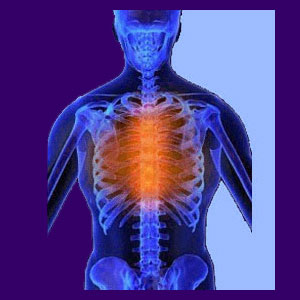
Back and chest pain is often closely related, either due to neurological involvement, muscular interaction or even mindbody process. Injuries or degenerative conditions in the middle and upper back can also cause pain in the chest area. Chest pain is always a symptom to take seriously, since it may be indicative of a serious health problem. If you experience sudden chest pain, go to a doctor or hospital immediately. Combination symptoms in the chest and back should be studied closely to ascertain any possible link between the 2 conditions before either location is treated.
Some frontal chest concerns may create back pain, such as in the case of pulled muscles or cancer. Meanwhile, lots of dorsalgia issues may also cause chest pain, including muscular concerns and neurological dysfunction.
This discussion focuses on providing information about combined back and chest pain symptoms to help patients better understand their suffering.
Back Pain and Chest Pain
One of the most common forms of back and chest pain is caused by a pinched nerve in the middle or upper spine. These thoracic spinal nerves can be compressed by a herniated disc, muscle spasm, bone spur formation or spinal stenosis, among other potential causes. In the case of chest pain related to a pinched nerve, the sensory or autonomic nerve fibers are often affected. Compressed sensory nerves can cause pain in the back, as well as in the area served by the nerve. Compressed autonomic nerves can cause a reduction in the signal reaching any of the organs served by that nerve. If the nerve goes to the heart or lungs, very serious health complications may occur.
It is also possible to have a back muscle injury that is causing sympathetic pain in the chest area. Severe muscle strains can affect neighboring muscle groups. Muscle pain in the back or shoulder can cause heaviness and pain in the upper chest. The pain can be dull or burning and may radiate throughout the affected region.

Causes of Back and Chest Pain
Pain can be caused by injury to the diaphragm muscle or other muscles and tendons around the rib cage. These muscles can cause chest and back pain in a large area.
Digestive problems such as heartburn, indigestion, acid reflux and ulcers can cause severe burning pain in the chest cavity. These symptoms are often so painful that they are mistaken for a heart attack.
Gallbladder problems can radiate pain into the chest cavity. This type of pain is often worse after eating. Gall bladder pain can be severe and come on rather suddenly.
Cautions for Back and Chest Pain
Any unexplained or unfamiliar chest pain can be life threatening. Do not disregard any pain near your heart or lungs. Pain in the chest may be an indicator of heart attack, unstable angina, pneumonia, pulmonary embolism, cancer or other emergency health concern. If you experience serious chest pain, go to a doctor or hospital immediately.
Similarly, if a known back injury occurs, there may be damage which could well become a medical emergency. Nerves can suffer tremendous trauma and may influence many bodily processes, including some vital functionality in the chest anatomy. Never take any injury for granted as being insignificant without proper medical evaluation.
Back and Chest Pain Advisory
I experienced an episode of chest and back pain one time only. It was quite severe and long lasting. I felt shortness of breath, pain in my lower chest and upper abdomen, as well as tightness and pain in my lower back. I thought it might be related to my usual back pain, but it turned out to be an injury to my diaphragm muscle. This injury occurred during martial arts training and lasted for about 2 months. It was quite an experience.
Acute back and chest pain due to a known spinal condition can be very uncomfortable. Make sure that you have been thoroughly checked out by a physician to rule out any other cause for the chest pain. If the injury is muscular, relax. It will most likely heal itself in a matter of weeks. If the pain is from a disc or bone condition in the spine, be rest assured that when the back pain is relieved through proper treatment, the chest pain should go away, as well. If the pain becomes chronic, or has no obvious physical cause, you might want to consider the possibility that there is a mindbody issue at the heart of the problem.
Anxiety, anger and fear can all cause heart pain, difficulty breathing, and of course, back ache. For these types of psychogenic health issues, knowledge therapy may offer a possible solution without any risks or costs.