
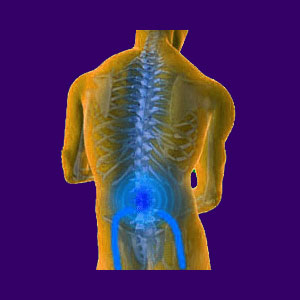
A pinched nerve in the lower back is a diagnostic theory which entails compression of a neurological tissue in the lumbar or lumbosacral spinal areas. The lumbar spine suffers the most degenerative changes of any region of the vertebral column. While these changes are normal and expected, they can still decrease the size of the central canal, the lateral recesses and the neuroforaminal spaces in the lowest areas of the backbone. These changes are usually noted from L3 to S1 and are focused on the intervertebral levels of L4/L5 and L5/S1.
A pinched nerve in the lumbar spine is one of the primary causes of sciatica. The usual cause for this to occur is from a herniated disc, or other structural obstruction, to reduce the size of the foraminal opening and impinge on a spinal nerve root. These lumbar nerve roots join together to form the sciatic nerve. This crucial nerve and its peripheral branches send neurological impulses to and from virtually the entire lower body.
This dissertation focuses on explaining pinched lumbar nerve roots in the lower spinal regions.
Pinched Nerve in the Lower Back Symptomology
Below are listed the typical clinical expectations for a pinched lumbar nerve root. Remember that individual cases may vary depending on many factors, including the extent and duration of the compression:
Back pain is common to experience in the area of the nerve compression, especially when the impingement first occurs. Pain may exist in the area served by the nerve. However, pain is unlikely to last, especially in the served area, since the nerve tissue should become numb with continued compression.
Tingling in the back, buttocks, legs and feet are typical expressions for new compression and are usually present when pain fades towards numbness.
Numbness in the area served by the affected nerve is a usual eventuality. Numbness may be subjective at first and change to objective over time.
Burning in the leg muscles is common accompanying pain, but should not continue once numbness sets in. Some burning sensations around the actual area of compression may endure.
Weakness in the leg or foot muscles is likely to be present once numbness sets in. Patient may lose functionality to a minor or complete degree in some areas of the anatomy.

Lumbar Pinched Nerve Warnings
Loss of bowel or bladder control or numbness in the buttocks or genitals might be an indication of cauda equina syndrome. This condition should be given immediate treatment by a medical professional. If the symptoms are left untreated, permanent nerve damage may be done to the affected areas, resulting in lifelong functional disability.
Minor CES might involve or or more of the nerve roots, while the worst cases may involve the entire cauda equina structure and produce nightmarish effects.
Pinched Nerve in the Lower Back Evaluation
The lumbar spine certainly experiences the most wear and tear in a normal adult. All the various degenerative processes which act on the vertebral bones and intervertebral discs can narrow the central canal, lateral canals and foraminal canals, especially from L4 to S1. However, this all being fact, pinched nerves are still not as common as one might think, since there are several proven criteria which need to be true (and rarely are) in order for a real pinched nerve to exist:
The cauda equina thins quickly and by the time it passes L5/S1, it only contains a few nerves. Therefore, it would take almost complete central stenosis to affect one or more of these remaining nerve tissues. The foraminal spaces in the lumbar spine are larger than the nerves require to exit. Therefore, the opening would need to be almost totally sealed in order to truly compress a nerve. Furthermore, it is deemed normal to endure mild to moderate stenosis here without any symptoms being produced.
Finally, symptoms generated must correlate to the expected clinical pattern. Most patients diagnosed with pinched nerves in the lower back have lasting pain and neurological dysfunction far too widespread to be accounted for from any singular compressive neuropathy issue.