
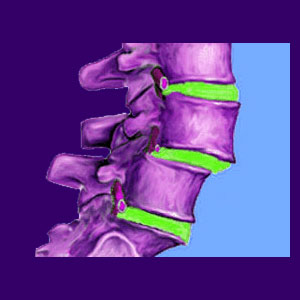
Degenerative spondylolisthesis is the result of spinal degeneration in the lower lumbar vertebral region. The most commonly affected vertebrae is L4, although it is possible for other levels to be affected instead, or as well. Some patients even have the condition affect their cervical spines. Mild vertebral displacement is relatively common in older patients and does not necessarily cause pain or nerve symptoms to occur. However, when the slippage is significant, symptoms are not only possible, but are likely and may be horrific in their expression.
This patient guide details degenerative versions of vertebral slippage in both anterolisthesis and retrolisthesis variants.
What is Degenerative Spondylolisthesis?
Spondylolisthesis describes a condition in which a vertebra slips out of alignment with the rest of the spine. This vertebra will typically slide forward, towards the front of the body, and can cause some problems with the integrity of the spinal anatomy.
In the degenerative version of spondylolisthesis, the condition is brought on by aging, rather than by trauma or congenital condition. As we get older, the joints which hold the vertebrae tightly together loosen up and the ligamentous soft tissues typically become lax, as well. Usually these changes are most noted at the area of the vertebrae known as the pars interarticularis. These changes allow some degree of vertebral migration, front to back, in affected spinal bones.

Causes of Spondylolisthesis by Degeneration
This version of spondylolisthesis can be brought on by 2 primary conditions:
Osteoporosis can weaken spinal bones and cause vertebral fractures. These fractures often cause the spinal bones to shift and slip, and can result in one or more levels of degenerative spondylolisthesis. Once this condition has started, it is very difficult to fix or reverse through conservative treatment. The best way to fight osteoporosis is to prevent it earlier in life.
Osteoarthritis causes increased bone on bone contact. This wear and tear grinds down the precise fit of the spinal bones, causing the potential for vertebral slippage. This condition causes hyper-mobility in the spinal joints and can affect multiple spinal levels. The condition is rarely overly symptomatic, but can cause severe symptoms in a minority of cases.
Effects of Degenerative Spondylolisthesis
Most conservative cases of spondylolisthesis are non-symptomatic. Some severe cases can be mildly painful and a minority can produce serious pain and symptoms. The majority of symptomatic cases are due to trauma, rather than degenerative process, although this is not an absolute rule.
Symptomatic cases might involve the possibility of spinal stenosis caused by impingement of the spinal canal.
Sometimes the vertebrae can shift so far that they actually put significant pressure on the spinal nerves. In this scenario, surgical correction is often the best treatment option. Other cases involve a pinched nerve root leading to sciatic nerve pain.

Degenerative Spondylolisthesis Summary
Remember that the normal process of aging might cause some degree of vertebral displacement in elderly patients. The structural changes might look might look scary on an x-ray, but spondylolisthesis is often a relatively harmless condition in its more mild forms.
If you can stay clear of the nocebo effect of the frightening diagnosis, you will most likely suffer little or no negative effects from a grade 1 or 2 condition. Consider most cases of spondylolisthesis to be just part of the road of life and you will keep walking down that road for many years to come. Grade 3 and 4 are another matter and might produce significant pain and neurological dysfunction. However, this is not a given and some patients with very severe vertebral misalignment issues do not have any pain whatsoever.
Back Pain > Spondylolisthesis > Degenerative Spondylolisthesis