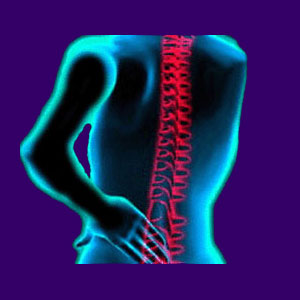
A loss of spinal curvature is a common condition which can be associated with virtually any type of neck or back pain syndrome. Some decreased spinal curvatures are the result of structural changes in the spinal column itself. However, many are simply the result of back muscle spasms which elongate the spine and reduce typical curvature, especially in the neck or lower back.
Mild to moderate losses of lordotic curvature are usually nothing to worry about and should not cause any drastic symptoms. However severe to extreme loss of curvature may become a huge liability for any affected patient. Other common diagnostic terms for this condition include hypolordosis, hypokyphosis, decreased spinal curvature or loss of lordosis.
This narrative examines conditions where the normal front-to-back spinal curvature is reduced or eliminated entirely.
Loss of Spinal Curvature Issues
The spinal curves are designed to distribute weight and shock throughout the body. A curved spine is far more efficient at performing these tasks than a straight spine could ever be. Spinal curves help reduce the chance of back injury, as well; since force applied will be neutralized more efficiently by a curved vertebral column than by a straight one.
Diagnostic testing, such as a spinal MRI, will often show a decreased lordosis in the cervical spine or the lumbar spine in conjunction with a back or neck pain syndrome. In virtually every case, the lordotic loss will be the result of the pain and not the other way around. In essence, the loss of lordosis is a consequence rather than a cause.

Loss of Spinal Curvature Data
Some people have rare structural issues causing a straight spine condition. Most of these cases should not be overly painful, but the straighter the spine actually is, the greater the chance that pain may become a factor. People with straighter spines are more prone to injury from trauma, as the spinal structures absorb more of the force, rather than spreading it evenly as a curved spine would and should.
In my experience, diagnostic testing performed after the resolution of most serious back pain concerns will show a return to typical or close to typical lordosis in the affected area.
Some of the more common structural contributors to a loss of typical spinal curvature include disc degeneration and herniation, osteoarthritic activity and osteoporosis.
Reduced Spinal Curvature Analysis
Many physicians and chiropractors will use a mildly straightened lordosis as an excuse on which to blame pain. Chiropractors especially will sometimes tell patients that spinal adjustments can be used to help re-create a more curved spine. This is illogical and unenlightened thinking, if a muscular spasm is the root source.
The lordotic change is likely to be a result of the underlying causative condition (whatever it may be) and treating it as the source of pain will be purely ineffective symptomatic treatment. Unless you have documented structural issues leading to a very straight lordosis, do not concern yourself too much with findings of straightening of typical curvatures on diagnostic tests. In most cases, these issues will resolve if you can find and effectively treat the actual source of pain.
Of course, this recommendation does not apply if you have known structural issues which have caused a straight spine to exist. However, even in these cases, conservative treatment options are very limited, or even nonexistent, except to help patients better cope with symptoms.