Scheuermann’s kyphosis is an abnormal spinal curvature syndrome which is also commonly known as Scheuermann’s disease or Calvé disease (however, it is not a disease by any means). The condition is a form of juvenile spinal osteochondrosis which can be congenital or early developmental in origin. Like most other forms of atypical kyphosis, the condition almost always affects the thoracic spine as its primary area of influence, creating visual deformity and possibly, functional impairment.
Scheuermann’s disease can come in many levels of severity ranging from barely noticeable to frightening and debilitating. Patients are always advised to seek qualified care from a specialist once diagnosed.
This investigation provides an overview of Calvé disease, including the source of the condition and the usual treatment options used to provide relief for affected patients.
Scheuermann’s Kyphosis Definition
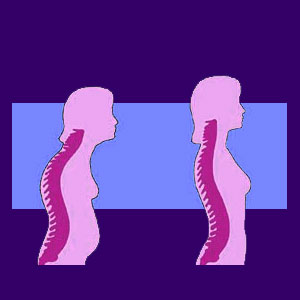
Scheuermann’s disease is characterized like many other forms of thoracic hyperkyphosis. The patient will demonstrate an abnormally severe curvature in the upper back, similar to a hunch or hump. Posture will be very poor, with the body bent forward to one degree or another and the neck and chin pushed forward at an awkward angle.
The patient will not be able to easily adjust this posture for the better, although with special posture exercises and physical therapy, they may be able to prevent it from getting worse.
The causes of Scheuermann’s disease are not fully understood, with a variety of theories circulating in the various medical communities. Currently, the disorder is mostly considered largely idiopathic. It should be known that the prognosis for Scheuermann’s disease also ranges considerably. Some cases progress virtually indefinitely, while others are completely stable.

Scheuermann’s Disease Concerns
Besides the postural issues associated with Scheuermann’s, there are a number of sometimes more serious factors to consider:
Advanced cases of Calvé disease may prevent much physical activity due to poor balance issues. Additionally, compression of internal organs is possible and may affect the heart, lungs and other structures, potentially causing serious health consequences. This is often the main reason cited for aggressive surgical treatment.
Thoracic back pain is possible in some cases, but many patients do not have any discomfort. Minor cases blamed for causing pain are almost always misdiagnosed, but obviously, advanced cases can be terribly symptomatic on rare occasion.
Patients may have pain due to muscular issues, neuroforaminal stenosis enacting pinched nerves or central spinal stenosis. A few patients have no pain at all, but do suffer mild to extreme neurological dysfunction when nerve structures are compressed by severe curvatures.
Scheuermann’s disease is characterized like many other forms of thoracic hyperkyphosis. The patient will demonstrate an abnormally severe curvature in the upper back, similar to a hunch or hump. Posture will be very poor, with the body bent forward to one degree or another and the neck and chin pushed forward at an awkward angle.
The patient will not be able to easily adjust this posture for the better, although with special posture exercises and physical therapy, they may be able to prevent it from getting worse.
The causes of Scheuermann’s disease are not fully understood, with a variety of theories circulating in the various medical communities. Currently, the disorder is mostly considered largely idiopathic. It should be known that the prognosis for Scheuermann’s disease also ranges considerably. Some cases progress virtually indefinitely, while others are completely stable.
Scheuermann’s Kyphosis Considerations
Most cases of Scheuermann’s disease are mild and not particularly problematic. Severe cases will be visually obvious and present the possibility for causing chronic back pain, limited physical functionality and the very real possibility for organ damage and eventual failure.
Treatment for minor cases is mostly used to increase function and prevent deterioration of the condition. The modalities used include specialized and general physical therapy practices and sometimes, complementary care, such as chiropractic treatment. Bracing may be useful in some instances. For severe cases, surgical treatment is often indicated, but should only be utilized in the most symptomatic circumstances, since the type of spinal fusion used is the most brutal and invasive possible.
We always suggest that diagnosed patients seek specialized care from an expert in atypical spinal curvatures in order to optimize their therapeutic outcomes.