
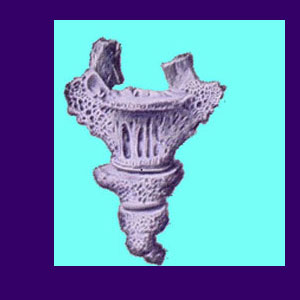
A broken tailbone is often a super painful and debilitating experience for a patient. The coccyx is the evolutionary remains of a tail that was left behind in the human species and amounts to a completely useless piece of the anatomy. While most people have a coccyx which follows the natural curvature of their spine and stays mostly tucked away from harm, other individuals feature a prominent coccyx which might be prone to injury.
The coccyx is known as a location which is problematic to treat for chronic pain conditions and often involves long-term unresolved symptomatic complaints. At least when a fracture is positively diagnosed, the reason for the symptoms should be obvious, unlike many idiopathic coccyx conditions.
This essay explores the process of recovering from a painful coccyx fracture.
Broken Tailbone Condition
Actual fractures are rare in a normally-formed coccyx. Bruising is far more likely from trauma, such as a fall or sports injury. In order to fracture a normal healthy coccyx, there must be significant and concentrated force applied, typically at a certain angle to the bone.
Even if a break is present, it is most likely to be a hairline crack or simple fracture at the site of a natural seam between fused coccygeal vertebral bones. Most of these issues are really very insignificant, although they can be extremely painful, particularly when they first occur.
The next most common injurious occurrence is a chip-type break at the very tip of the coccyx. Serious, complex or compound fractures rarely occur in the coccyx region, although they can be a medical emergency if they do exist.
Broken Tailbone Recovery
Even if a fracture does exist in the coccyx, it should heal all by itself. Surgical reduction is rarely used to treat a fractured coccyx, since the bones will usually heal fine on their own. Getting past the months of residual pain can be a trial, but eventually, the symptoms should resolve completely.

Patients with chronic coccyx pain which has been blamed on a fracture, must investigate if the bones have actually healed or not before proceeding with further treatment. In a few cases, there may be a problem with the healing process or the way the bones have rejoined. In other cases, pain may endure when all seems perfectly healed.
In ongoing expressions, the true cause may be a mindbody process which has conveniently used the fracture as a trigger for pain to continue even after the actual injury is resolved. The tailbone is a common location for psychological back pain, and related symptoms, which explains why so many coccyx pain complaints are so treatment-defiant. Remember, broken bones will virtually always heal and should not cause permanent pain syndromes to exist in most normal circumstances.
Broken Coccyx Tips
If you are among the many who have endured a fractured tailbone, or even some other form of coccyx pain, take heart. Your pain should heal with time and/or appropriate treatment. The coccyx is a notoriously slow structure to heal, but eventually will become good as new in most patients.
If your pain continues beyond a year, or worsens, there is a good chance that your pain is coming from a different source than might be expected. In these circumstances, new diagnostic evaluation is advised to be sure there are no other structural conditions which may be causative. If not, some patients have found lasting relief using a different approach to care, like knowledge therapy.
Remember that a coccyx injury might just be a trigger mechanism for some psychoemotional process to begin. The injury heals, but the mind perpetuates the pain. This is a very common clinical profile of chronic tailbone pain. Some patients with purely structural problems find eventual relief using physical treatment modalities, such as chiropractic manipulation or osteopathy. In these scenarios, be sure to find a specialist in coccyx pain for best results.