
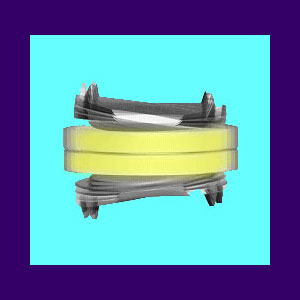
One of the newest technologies in back surgery is the much heralded artificial disc replacement surgery, also known as disc implantation surgery or total disc replacement. In this procedure, the biological injured or degenerated disc material is removed and an artificial synthetic intervertebral disc is implanted in the spine. Disc replacement technology has been used for many years in Europe, but has still not caught up in popularity or application in the United States.
Artificial discs are marvels of scientific medical engineering. Duplicating the form and function of human intervertebral discs is no easy task. Doctors and scientists have come up with several varieties of artificial discs. In the meantime, there is much debate about which style truly serves patients best, endures the tests of actual implantation and minimizes the risk of device failure over an extended timeline of product life. Only time will tell which designs work best in actual back pain patients.
This guide examines total disc replacement surgery as an alternative for patients with specific disc pathologies that might often entail being subjected to discectomy and subsequent spinal fusion treatment.
Artificial Lumbar Discs
Here are some of the most commonly used types of synthetic lumbar discs:
Charite (3 piece)
ProDisc (3 piece)
Maverick (2 piece)
Flexicore (1 piece)
Kineflex (2 piece)
Artificial Cervical Discs
Here are the most popular cervical disc substitute counterparts:
Prodisc-C (3 piece)
Bryan (sealed 3 piece)
Prestige (2 piece)
Flexicore (1 piece)
Kineflex (2 piece)
Porous Coated Motion (3 pc)
Mobi-c

Disc Replacement Surgery Versus Spondylodesis
Disc replacement surgery is usually much less invasive than traditional spinal surgery. In most artificial lumbar disc replacements, the incision is made in the abdomen and the surgery performed through the front of the body. This anterior approach to spinal operations has been used successfully with virtually all types of procedures and has revolutionized the surgical sector. Recovery time is relatively quick, especially when compared to spinal fusion.
Disc replacement maintains the flexibility of the spine and allows continued individual vertebral level movement, unlike fusion. This makes the disc replacement approach a far more enlightened technique which does not cause the enduring degenerative effects associated with spinal fusion surgery.
Problems with Artificial Disc Implants
Long-term results about the success of these procedures are not always available. Short-term studies have shown some amount of device failure, including core slippage in 3 piece discs. Slippage of the entire artificial disc also occurred in several of the 1 and 2 piece forms. The question of having to repeat the procedure as the artificial disc wears is also a concern, especially in younger patients.
As with all operations, there is risk from anesthetic, infection, device rejection or specific back surgery complications. Spinal fluid leaks, nerve damage or simply poor surgical results may occur. The worst possible outcome is surely the all too common failed back surgery syndrome.
The Future of Disc Replacement Surgery
I am very interested in these procedures and devices. I think that the future of spinal surgery will move in the direction of implants, rather than fusions. It makes more sense to maintain motion and flexibility where nature designed it, rather than prevent vertebral movement.

I recently participated in a case study of a patient who received 2 artificial lumbar discs. The patient was an active guy and did not like the prospect of a life of restricted physical activity. He had the procedure done through his abdomen and was up and standing that same day of his surgery. It was amazing. He made a fast recovery in a matter of weeks and returned to skiing and sports in a couple of months.
Disc replacement surgery is a new hope for many pain patients. I recommend following this technology very closely for innovations and advancements.
If you are in the market for the procedure now, you might have to do quite a bit of leg work to talk with a variety of doctors who offer different techniques and disc devices. I strongly suggest looking into all your options and not simply finding the most convenient doctor who offers any old type of disc replacement. Get up to date on the industry happenings right now and go with the best product for your needs. Hopefully, time will prove your choice to be a wise one.