
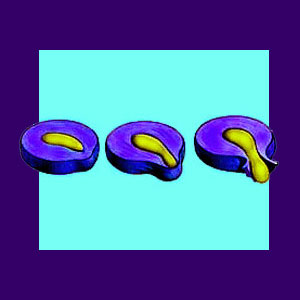
An extruded disc is another name for a ruptured disc and is further broken down in extruded contained and extruded uncontained classifications. When a disc extrusion occurs, the inner nucleus pulposus actually breaks through an opening in the annulus fibrosus called an annular tear. All possible variations of extrusions are still considered to be types of herniated discs.
The slight technical difference between a rupture and an extrusion (semantics) is the definitive proof that some or all of the nucleus has left the disc structure in the case of an extrusion, while in a rupture, this is implied but not always imaged. Technically, the complete disc nucleus can remain inside the disc, even if it ruptures, although this seldom, if ever, occurs.
This narrative examines the occurrence of intervertebral extrusions in the spinal column and how these disc abnormalities are different than contained herniated discs.
Contained Extruded Disc
Contained extrusions are really just severe herniations in which the inner nucleus material begins to leak out of the outer disc wall. However, the nucleus material does not separate from the disc structure and the entire disc remains in a single, albeit badly damaged, piece.
Extrusions generally might be more symptomatic than disc bulges when they first occur, especially if they are caused by trauma, rather than simple degeneration.
Contained extrusions can enact pain through the processes of spinal stenosis, foraminal stenosis or chemical radiculitis. However, most contained extrusions are completely asymptomatic or only temporarily symptomatic.

Uncontained Disc Extrusion
An uncontained extrusion is also sometimes called a sequestered disc. This means that the inner nucleus which leaked out of the outer disc wall has separated completely from the disc structure and became free to move about inside the body. Although this spilled nucleus typically does not go very far, sequestered discs are often blamed for causing a greater percentage of chemical radiculitis symptoms than contained ruptures.
In time, both contained and uncontained extrusions can calcify, often stabilizing the disc and preventing further degeneration. In some instances, calcification can increase spinal stenotic changes within the central or foraminal canals, possibly eliciting symptomatic expressions.
Disc Extrusion Help
Ruptured discs sound about as scary as a spinal diagnosis can be. However, there is little proof that they are any more dangerous or painful than bulging discs. Many people experience a rupture due to normal spinal degeneration and never even know about the disc damage. Other people suffer a spontaneous rupture from extreme trauma and typically experience pain (which might be very severe at times) for 2 to 8 weeks.
Many extrusions, like other forms of herniations, resolve without formal medical treatment or with conservative back care practices. Herniated disc surgery should be avoided if at all possible, since operations generally demonstrate poor results for permanently ending disc pain in most patients.
To learn more about your specific type of disc pathology, talk to your doctors and have them clarify the diagnosis according to the terms you now fully understand. If you have any doubt at all that the disc irregularity is the true source of pain (and you definitely should) then please take our advice to seek out qualified second opinions from other care providers before agreeing to undergo any type of treatment.