
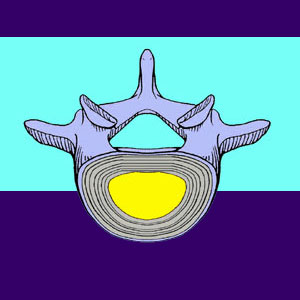
There are 2 primary structural facet joint syndrome causes, although neither is inherently responsible for enacting long-term painful symptoms. However, a completely different nonstructural process, unrelated to facet joint changes, may actually be the true culprit for pain in many seemingly symptomatic cases of facet syndrome.
Clinical research shows little correlation between the structural changes which are virtually universal to experience as we age and the occurrence of back or neck symptoms. However, mindbody care providers have definitively linked ischemia as a possible source of symptoms in some patients who were previously diagnosed with facet degeneration.
This dialog examines the traditional and alternative views on what causes severe facet joint pain, including structural and mindbody models of causation.
Anatomical Facet Joint Syndrome Causes
The diagnosis of facet joint syndrome describes actual physical changes in the spinal anatomy which are theorized to source back or neck pain. These changes can be caused by any of the following factors:
Spinal degeneration is a normal experience for any adult human being. As a person ages, all the structures in their spine will deteriorate, including the vertebrae and intervertebral discs.
Arthritis in the spine and degenerative disc disease are virtually universal conditions affecting everyone in their lumbar and cervical spinal regions. Facet joint changes come about as a result of spinal degeneration and the arthritic processes. Most of these changes are not inherently painful or problematic, although they are often implicated unfairly in the creation of coincidental painful complaints.
Back injury can accelerate degenerative changes or actually reshape the spinal facet joint anatomy. Injury to the facet joints directly can cause structural issues and severe trauma may even cause spinal instability in very rare instances. In cases of definitive injury, the source of pain is usually not in question.

Mindbody Causes of Facet Joint Pain
The majority of patients who are diagnosed with facet joint syndrome might surely demonstrate the physical anatomical changes associated with spinal joint aging. However, these changes are not typically the source of the pain and merely function as a scapegoat condition on which the symptoms are mistakenly blamed by a care provider.
There is little evidence linking typical facet joint degeneration to back ache and much evidence to the contrary. In fact, accepted diagnostic protocol reflects the idea that spinal structural irregularities must not be implicated as the source of pain unless definitive evidence can be produced.
In the case of facet arthrosis, this proof is not only often lacking, but may be actually repudiated by the symptomatic expression itself. In these instances of painful symptoms and coincidental facet degeneration, one of the most logical sources of pain is ischemia. This regional process uses oxygen deprivation to create a seemingly structural pain syndrome in the area apparently suffering from facet joint syndrome. However, unlike actual facet joint complaints, ischemia rarely responds well to medical care, leading to an ongoing chronic back pain syndrome.
Ischemia is the reason why so many ongoing pain conditions resist treatment. When a coincidental structural issue is blamed and the oxygen deprivation is not recognized as being causative, treatments have almost no hope for success, except by rare placebo effect.
Editorial on Facet Joint Syndrome Causes
If you are suffering with diagnosed facet joint degeneration, but have not found relief despite a battery of treatment options, there is a good chance that your diagnosis may be incorrect. This is even more true if you never injured your facet joints in any significant way. Back pain treatments will do nothing to cure ischemia permanently. They will also demonstrate poor results when there is another yet undiscovered structural issue which is really causing the symptoms.
Of course, not all facet joint diagnoses are incorrect. Some patients truly do have problematic bone spurs which can create many agonizing expressions. However, in the case of serious and diverse symptoms not deemed to be mechanical, facet joint syndrome is seldom the real source. Remember, the facet joints are small and will experience localized and mild to moderate symptoms when a troublesome physical condition does exist.
Back Pain > Facet Joint Syndrome > Facet Joint Syndrome Causes