
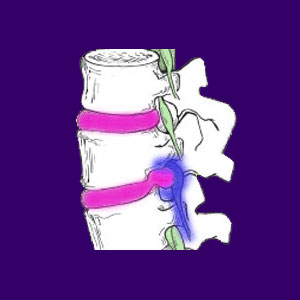
A pinched nerve is a common diagnostic conclusion pronounced upon many patients who suffer back and neck pain. Compressed neurological structures are often theorized to exist due to herniated discs, spinal arthritis, facet joint deterioration, abnormal spinal curvature, vertebral slippage or ligament hypertrophy.
Pinched nerve is a common term for any neurological structure that is being compressed or constricted. Nerves connect the brain to the rest of the body through the spinal cord. If a spinal nerve is compressed, that nerve will not be able to send neurological messages properly. This lack of adequate signal can cause sensory, motor or autonomic deficiency in the area of the body served by the affected nerve.
Nerve pain can be diagnosed using a wide range of possible terminologies, often making this a very confusing verdict for the patient to understand. The most common is neuralgia. Other technical terms may include radicular pain, neuropathy, compressive neuropathy, compressive neuralgia, nerve effacement, nerve impingement, nerve displacement, mass effect on a nerve or nerve encroachment. No wonder so many people simply stick to the easiest name: pinched nerve.
This narrative describes and explores the diagnosis known as compressive neuropathy, also known as a pinched nerve, with a focus on spinal varieties of nerve compression.
Spinal Pinched Nerves
There are 3 distinct kinds of spinal nerves that connect the spine to the rest of the body:
Sensory nerves carry feelings such as temperature, pain and texture to the brain. These are responsible for sensation, hence their name. You feel through sensory nerves.
Motor nerves carry impulses for movement to various parts of the body. You move through the power of motor nerves, all contracting specific muscles to elicit the desired anatomical motion.
Autonomic nerves control involuntary processes, such as blood pressure, heart rate and digestion. These are some of the most crucial structures in the anatomy and can spell horrible consequences if affected by a compression condition.
Spinal nerves are actually large bundles of neurological tissue that contain different types of nerve fibers. Sensory, motor and autonomic nerves might all be bundled together as they leave the spine. This is why compression of a spinal nerve root might cause several different types of symptoms.

The most common areas to experience a compressed nerve root are in the neck and the lower back. These are the areas of the spine that have to move, flex and bend the most. The result of all this movement is lots of wear and tear on the intervertebral discs and vertebrae.
It is possible that a nerve may become compressed within the central spinal canal itself (central spinal stenosis), in the lateral recess (lateral recess stenosis), within the foraminal opening (neuroforaminal stenosis) or even after it has left the spinal canal (extraforaminal stenosis). Complicated? You bet.
Pinched Nerve Topics
The following compositions explain and explore compressive neuropathy conditions in vivid detail:
There are many other names for compressive neuropathy, including compressed nerve and nerve impingement.
Nerve compression may be painful locally, but most patients will suffer symptoms in areas of the body innervated by the constricted tissue.
Radiculopathy, also commonly called radiculitis, can be caused by central spinal stenosis in the lowest reaches of the spine or foraminal stenosis anywhere in the vertebral column. However, it must be noted that most neuroforaminal narrowing is asymptomatic and completely innocent.
Pinched cervical nerves will typically cause symptoms in the arms, while pinched lumbar nerves will enact expressions in the legs.
Chronic nerve pain is not characteristic of a compressive condition, since impinged nerves will usually stop signaling pain in a short timeframe.
There are many potential compressed nerve causes in the spinal column.
Compressed nerve symptoms range greatly, depending on the location of the neuropathy and the degree of compression suffered.
Compressed nerve treatments are offered throughout the traditional and complementary medical sectors.
Compressed nerve therapy might be noninvasive or surgical in nature.
Achieving compressed nerve relief is wholly dependent on accurate diagnosis and successful implementation of treatment.
Accounting for the compressed nerve psychology will facilitate better healing of mind and body.
Pudendal neuralgia is a specific type of nerve compression syndrome that often creates a diagnostic enigma in affected patients.
Pinched Nerve Help
There is some amount of controversy what exactly qualifies to be called a compressed nerve and what circumstances may induce actual cases of pinched nerve back pain.
Some nerve compression specialists believe that neurological tissue can be truly and chronically compressed by bone only. Others believe that a herniated disc might also cause this condition to exist long-term. None doubt that either condition can elicit symptoms, but there is some debate about proper terminology. The name game, if you will.

Arthritis can definitely cause bone spur formation leading to reduced nerve signal. Herniated discs might create nerve pain for a short time (2 to 8 weeks), but ongoing nerve pain rarely comes from a herniation, since continued pressure is needed to compress the tissue and many herniations lose their acute severity with time.
Regardless of the cause of your compressed nerve pain, the most important thing to remember is that the suffering is likely to be temporary. Disc conditions will usually get better on their own and virtually any type of compression will resolve with appropriate treatment. The key to finding relief is accurate diagnosis.
There are also nonspinal nerve compression issues which can occur virtually anywhere in the anatomy. Some are even suspected in causing back pain, such as in the examples of thoracic outlet syndrome or piriformis syndrome.
Never forget that many symptoms of apparent nerve compression can also be easily sourced by regional oxygen deprivation of the nerve tissue. Although nothing is actually pinched, the nerve can not function without adequate circulation and oxygenation and therefore suffers a (usually subjective) decrease in activity, often resulting in the typical pain, tingling, weakness or numbness seen in traditional compressive neuropathy conditions.
Pinched nerve symptoms can be managed or cured using our proprietary pain relief program. Since the program is safe and effective, it is no surprise that it has received so many excellent reviews from doctors and healthcare organizations.