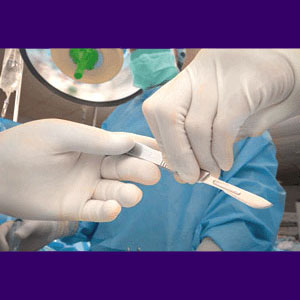
Scoliosis surgery techniques are some of the most invasive and drastic of all back surgeries. Surgical correction of pathological spinal curves is typically only used for severe degrees of scoliosis or for conditions that show all the signs of worsening.
Most doctors will not consider surgery an option for curvatures under 50 degrees. Most doctors will also not consider surgery on young children, since they are still growing and may be able to be effectively treated with more conservative bracing. Regardless, it is generally better to wait until the child has already gone through the majority of growth before any type of back surgery is performed.
This essay concentrates on the risks and benefits of surgery for scoliosis, as well as cautions patients about some of the common hazards of the surgical approach to care.
Surgery for Scoliosis
The procedure used to treat scoliosis surgically will always be some variety of spinal fusion surgery. This procedure uses bone grafts and hardware, including screws, hooks and rods, to forcibly straighten the spine and prevent further curvature from occurring. Bone grafts may be harvested from the patient or from a cadaver donor. New technology is exploring the possibility of using artificial bone as a graft substitute.
The goal of spinal fusion surgery is to correct as much of the spinal curve as possible and to prevent further curvature. For a typical thoracic curve, the spinal fusion must be done over 10 vertebral levels. This will form one solid and inflexible piece of bone from 10 individual vertebra. The fusion is achieved by using metal rods and bone grafts to join the vertebrae together. This hardware is most often left in place permanently to strengthen the fusion against the redevelopment of any atypical curvature.
The spinal fusion procedure can be done with incisions in the front of the abdomen (anterior approach), the back (posterior approach), or a combination. Incisions in the back are usually more invasive, requiring more muscle dissection and enacting more damage to healthy tissue. They also require more vertebrae to be fused. Incisions in the abdomen often require fusing fewer vertebral levels, but can only be used for curves in certain areas of the spine.
It is often necessary to perform separate discectomy surgeries to remove all of the intervertebral discs in the levels to be fused. This procedure is performed in advance of the fusion surgery and allows for a better surgical correction during the fusion.
Warnings for Scoliosis Surgery
Spondylodesis demonstrates greatly heightened risk factors when compared to most other spinal surgeries. The incisions are generally large. They will leave bad scars.
There is a significant risk of suffering a serious postoperative infection.
There is a risk of rejection of the bone grafts if they are acquired from cadavers.
Spinal fluid leaks or continued bleeding sometimes occur after surgery.
Spinal degeneration of other vertebral levels will be a factor with all large fusions.
There is a chance of experiencing nerve damage.
There is a slight risk of paralysis due to spinal cord injury.
There is also the chance for an unsuccessful fusion and a continuing curvature.
Severe complications arise in about 10% to 20% of scoliosis surgery patients, although my own research places this number quite a bit higher. I guess the definition of serious complication is far too subjective for medical science to accurately portray.
Scoliosis Surgery Expectations
Fusion is a very serious surgery. It is a procedure that takes many hours to complete. The patient will need to remain hospitalized for 4 to 7 days in most cases and that is if all goes perfectly. The patient will need to severely limit their physical activity for up to a year or more during healing. Obviously, extensive physical therapy rehabilitation is inherent to completing the surgical process.

Surgery might be the only effectual method of treating a serious curvature. However, always make sure to research the different options available to you. There are many approaches to fusion and some are far less traumatic to endure and might feature better curative results. Shop around for a great doctor and always be comfortable and confident with your choice of surgeon before letting them operate on you.
I offer you my most sincere wishes for a positive result.