
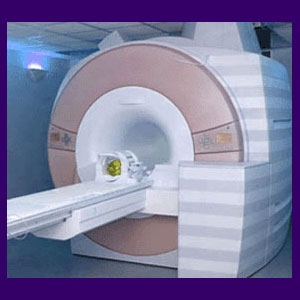
A spine MRI is one of the best diagnostic tools available to back doctors and back pain patients alike. This incredible technology will accurately image even the smallest and seemingly insignificant spinal details, including abnormalities of the vertebral bones, intervertebral discs and even surrounding soft tissues. However, even the mighty magnetic resonance imaging can be used as a tool which creates diagnostic error in many patients, since the irregularities discovered in the films are rarely to source of chronic back pain, but are often blamed as the causation.
It is crucial to understand right from the start that an MRI will never provide a diagnosis. Only a doctor who reads and interprets the films can provide a diagnostic verdict, making this a highly subjective test to be sure.
Let’s take a detailed look at the pros and cons of undergoing magnetic resonance imaging for a back or neck pain problem.
Spine MRI Facts
MRI, or magnetic resonance imaging, is a superb example of modern medical technology. The imaging device can create incredibly detailed images of the spine from every possible angle and perspective. These films give the doctor an unparalleled glimpse into your body to determine what might be causing the back pain you are feeling.
MRI is useful for providing evidence used when diagnosing the full range of spinal abnormalities, since it truly provides a comprehensive view of the skeletal structures.
MRI is expensive technology and many patients are precluded from gaining access to the test, simply due to economic reasons or lack of insurance coverage. This is a huge shame, since the test could save vast sums of money on unsuccessful back pain treatments, if it were given early in the diagnostic process. That being said, MRI is also manipulated to force many patients into unneeded treatment and even surgeries. Doctors can choose to ignore or highlight structural issues which may or may not be causative for symptoms. In essence, there is little accountability and 2 patients with identical results might be told 2 very different verdicts as to the condition of their spines.

Spine MRI Problems
Like any other medical tool, the MRI can work for good or for ill. Although the technology is excellent, the images are still open to interpretation by radiologists and physicians. Several doctors might read the exact same MRI films and determine various diagnoses based on the imaged spinal evidence. Many conditions can be “played up” or “played down” depending on the (usually economic) motivations of the caregiver.
Personally, my many MRI films were used to misdiagnose my pain time and time again, since most of my doctors blamed my symptoms on the various spinal concerns they saw on my test results. In my case, it was advanced degenerative disc disease, mild scoliosis and 2 herniated discs at L4/L5 and L5/S1. Now, if the pain was actually enacted by these conditions, the MRI would have served me well. However, my pain did not turn out to be caused by any structural process whatsoever, so in my case (and countless millions of other back pain patients like me), even the MRI was proven to be a defective source of diagnostic information.
In essence, the test can find abnormalities in the spine, but these abnormalities are rarely the source of pain. This fact has been reinforced by major medical associations which have recently begun to tell doctors not to utilize any diagnostic imaging to diagnose back pain without definitive clinical evidence of a causative process. Basically, they are saying that just because an abnormality exists in the spine does not mean it is the reason for pain. In fact, these organizations go on to say that there is little, if any, evidence linking spinal irregularities to the incidence of any symptoms in most patients.
Spine MRI Help
I still routinely suggest that patients should get an MRI for back pain if it is made available to them. The test is so valuable for creating both a plan for treatment, as well as eliminating the possibility of a structural scapegoat as the source of symptoms. Just remember that the results are interpreted by humans. Humans with the desire to either deny you insurance benefits as part of their job or more likely, humans with the goal of making money from caring for your seemingly structurally induced pain.
Use the knowledge gained from the MRI as a guide, but do not let it replace common sense or any of the valuable lessons learned in knowledge therapy. If you do not have access to an MRI or are denied coverage, try to at least get a CT scan or other equivalent test instead.