
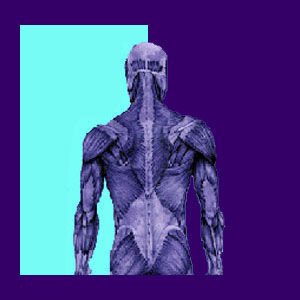
A muscle imbalance is a common diagnostic term used especially by chiropractors, physical therapists and sports medicine practitioners. The back muscles surely play a crucial role in the health of our spines and can also be the source of severe back pain. However, imbalances in the back muscles, leg muscles and hip muscles are typically just another scapegoat on which symptoms are mistakenly blamed in the overwhelming majority of diagnosed sufferers.
Muscles are usually part of antagonistic pairs, which means that one set moves an anatomical part in one direction, while the antagonistic muscles move the same anatomical part in the opposite direction. To put it simply, a muscle imbalance occurs when muscles which drive a particular anatomical action are drastically stronger/weaker and/or tighter/looser than those which drive the opposite movement. Basically, one side of the antagonistic pairing is much stronger than the other. Muscle imbalances can be diagnosed virtually anywhere in the body and are often implicated in far-ranging symptomatic syndromes.
This dialog explores the diagnostic theory of muscular imbalance as the primary cause of back pain.
What is a Muscle Imbalance?
Imbalances are problems which occur in muscle groups which work in opposing tasks due to over and under usage. Muscles are generally set up with one group needed to perform a given activity, such as bending your leg, and another group used for the opposing action, such as straightening your leg. These are called antagonistic pairs.
Almost every bodily movement has an opposite movement possible, from the neck down to the toes. Muscular pairs which accomplish these opposing movements can work front to back or side to side (left and right) throughout the body. Imbalances are thought to occur when one set of specific task musculature is overdeveloped, overstretched or overused, while the opposing (opposite task) muscles are underdeveloped, under stretched or underused.
This can occur from normal day to day activities or from repetitive motion jobs and repetitive stress injury conditions.

Muscle Imbalance Complications
Not only can the muscles themselves be unbalanced, but the connecting ligaments and tendons can also suffer the same fate. This makes for many diagnostic combinations possible to explain any particular pain condition.
Soft tissue injuries can indeed cause back muscle pain, as can bad posture. These are often considered prime causes of muscular imbalances, although many patients have pain which is idiopathic. In these cases, when no apparent obvious cause of imbalances exists, the exam is generally expanded to pinpoint the possible causes in the person’s day to day activities.
Muscular Imbalance Treatment
Treatment for muscular imbalances generally takes the form of back exercises, back stretches and applied kinesthesia. In some instances, specific forms of posture correction exercises will also be utilized in the therapy regimen. Patients are taught to move properly and to balance their muscles using appropriate athletic and postural exercises. Ergonomics is stressed and work habits might be studied exhaustively.
Physical therapists, chiropractors and Alexander technique practitioners have taken the lead in treating diagnosed muscular imbalances, although some traditional medical back doctors might also participate in treatment.
Imbalanced Muscles
While the concept of this back pain diagnosis makes sense to me, I have personally seen it abused perhaps more than any other single suspected causation for symptoms. In fact, it was applied to me as early as age 16. I am certified as a personal trainer and have been involved in physical fitness through martial arts my entire life.
Achieving the accomplishments which have made me who I am in the martial arts have definitely provided me a vast store of knowledge about the inner and outer mechanical workings of the body. Couple this with my decades long study of Traditional Chinese Medicine and defensive acupressure and I feel quite qualified to talk on the topic of human musculature.

I do not subscribe to the theory that imbalances exist at all in most diagnosed patients. Sure, some these people might have the physical signs of imbalances, but I do not believe that these circumstances can explain the type of pain generally affecting patients that I meet day to day.
I expand my thought to include the fact that muscular and neurological ischemia is the root cause of the muscular disorders, if they even exist at all… not imbalances. Ischemia is a proven agonizing menace which affects countless poor souls, while the human musculature is highly adaptable to a wide range of uses and abuses.
Before the hate mail comes in from all you care providers who teach this theory as the potential cause to all of life’s problems… I do understand that some patients do have muscular overuse issues, such as RSI. However, these events are rare and do not represent the untold hundreds of millions diagnosed with muscular pain due to imbalances every year. In fact, I will go so far as to name imbalances one of the most creative back pain scapegoats ever, since they are virtually impossible to prove and completely impossible to disprove.
If your pain has been diagnosed with as a form of muscle imbalance, I urge you to consider the alternate possibilities carefully, particularly if the condition does not respond to appropriate physical therapy in the expected time frame.