
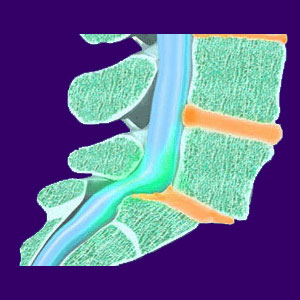
Retrolisthesis is the exact opposite of an anterolisthesis condition and is sometimes known by the diagnostic term retrospondylolisthesis. This spinal abnormality describes a condition in which one or more vertebral bones move out of alignment with the bones above, and/or below, towards the rear of the body. In essence, this disorder is demonstrated by a posterior vertebral shift at one or more levels.
Vertebral slippage is easily diagnosed on any of the various forms of diagnostic imaging, but is best seen using MRI technology, since this technology will help ascertain any neurological involvement which may result from the misalignment.
This essay details rearward slippage of one or more vertebral bones in the human spine. We will cover diagnosis of retrospondylolisthesis and provide some facts that are not commonly known to many people affected by vertebral migration.
Retrospondylolisthesis Facts
Retrospondylolisthesis takes 3 primary forms: Complete slippage is described as a single level which is out of alignment with the vertebral bones above and below. This is the most common form. Stairstepped displacement is described as multiple vertebrae out of alignment, each slightly further out of place when compared to the vertebra above it, forming a progressive stair-like effect. Partial slippage describes a tilting posterior misalignment in which the slipped vertebrae is out of alignment with only the vertebrae above or below, but not both.
The expression will often be determined by the particular process responsible for enacting the slippage. The vast majority of cases fall in the Grade 1 or 2 categories and should not be symptomatic at all.
However, some cases obviously act as scapegoats on which back pain is mistakenly blamed. Of course, severe and extreme forms of the condition can create pain, nerve compression issues and even spinal instability.

What is Retrolisthesis?
Retrospondylolisthesis is a spinal bone misalignment condition. It is relatively common and not generally known to usually produce pain or neurological symptoms in mild and moderate cases. Severe cases often do involve dramatic symptomology and may require aggressive treatment. Being a variety of spondylolisthesis, the condition is rated in terms of severity using the same percentile scale:
Grade 1 is described as 1% to 25% relative slippage.
Grade 2 is described as 26% to 50% relative slippage.
Grade 3 is described as 51% to 75% relative slippage.
Grade 4 is described as 76% or more relative slippage. Some extreme cases can exceed 100% migration from typical vertebral positioning.
Retrolisthesis Factsheet
In most cases, retrospondylolisthesis is nothing to fear. It can be a congenital or developmental defect, the result of back injury or simply part of normal spinal aging. It is most common in the neck, followed by the lumbar spine and only rarely exists in the thoracic spinal region. Regardless where the issue resides in the spine, symptoms are not likely unless the slippage is severe.
If you have mild to moderate retrospondylolisthesis which has been targeted as the source of chronic back pain and not responded well to treatment, I urge you to reconsider the validity of the diagnostic theory.
At the very least, get a second opinion from an objective source who is qualified to diagnose spinal misalignment conditions.