
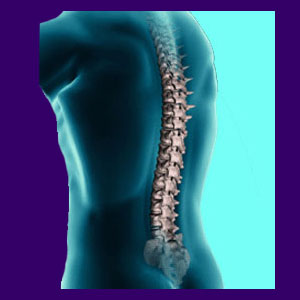
Upper back pain symptoms can be difficult to cope with and even more problematic to effectively treat. Upper back pain is not generally the result of spinal degeneration, since this region is not prone to the same wear and tear endured by the cervical and lumbar areas. Most upper back symptoms are caused by traumatic injury to the spine itself or the soft tissues which make up much of the thoracic anatomy. Regardless of the causation of symptoms, it is always necessary to achieve a correct diagnosis if the patient is to have any hope of finding a permanent cure.
The upper back is very strong and durable, but can be injured like any other anatomical location. Focused trauma can cause soft tissue injury, such as torn ligaments, tendons or muscles themselves. This is a common result of whiplash injuries. Sometimes damage can occur to the spinal column and may include vertebral fracture, spontaneous disc herniation or other type of trauma.
Location of Upper Back Pain Symptoms
The majority of patients suffer pain between the shoulders, either unilaterally or bilaterally. Some patients suffer discomfort which runs up and down the middle back close to the spine on one side or both. Many patients have pain in the lower neck and possible stiffness in the cervical region, as well. A few patients may have pain, tingling weakness or numbness in the upper extremities, including the shoulder, upper arm, elbow, wrist or hand. Some patients even have symptoms which radiate into the lower back or even express themselves as sciatica in the legs and/or feet.
The possibilities for upper back pain expressions, like most forms of dorsopathy, seem almost endless. Strangely enough, the location of symptoms does not often correlate to the diagnostic theory. This is something rarely considered by patients and is definitely responsible for the disappointing treatment outcomes demonstrated by many medical modalities. Evaluation with a qualified neurologist is one of the best ways of being sure your diagnosis is correct, but even this strategy can fail in some instances.

Resolving Upper Back Pain Symptoms
The back pain industry is almost exclusively focused on treating pain using symptomatic methods. This is especially true for upper and mid back pain complaints, since these symptoms are unlikely to be traced back to disc abnormalities or significant arthritic processes.
The most common modalities used for care include chiropractic, physical therapy, and drugs. All of these treatments are symptomatic and rarely provide a permanent cure for patients with chronic pain patterns. Most likely, the patient will have good times and bad, experiencing some relief regularly, but never fully beating their pain completely.
Remember that symptomatic treatment, by definition, is never going to cure any causative condition (that is if the causative condition can even be accurately identified). It can only make the pain easier to cope with.
Symptoms of Upper Back Pain Experiences
In my experience, I see many upper and middle back pain syndromes which are ischemic. I also see many soft tissue injuries which can occur through a great number of possible activities and may be excruciatingly painful. I have suffered through many of these myself during my most active years training in martial arts.
Many of these possible pain generators are overlooked in favor of some scapegoat condition which innocently and coincidentally exists in a nearby spinal area. Physical therapists rarely mistake soft tissue concerns for spinal disorders, but many orthopedic physicians surely do.
What I do not see is the evidence behind many of the diagnoses currently “in-vogue” in the treatment sector, including muscle imbalances and thoracic outlet syndrome. TOS is just as misused of a diagnostic theory in the upper back as piriformis syndrome is in the lower back. Muscle imbalances are certainly possible and occur in rare circumstances, but most cases I have seen diagnosed were completely incorrect, particularly around the upper and middle back regions.
I warn patients who have not received lasting resolution of their pain, despite various methods of care, to reconsider just how accurate their diagnosis may be. When I see patients who can not find a cure, despite their best efforts, I virtually always blame misdiagnosis as the typical cause. This is logical and supported by widespread research.