The backbone is another colloquial name for the spine. The human spine is the structure which gives our bodies form and function; providing us with protection, mobility and unrivaled physical ability, making homo sapiens the most successful species on this planet. The spinal column is also a greatly misunderstood piece of the anatomy. Most people think of it as a delicate and fragile structure that can be injured easily, as well as a structure which often rarely completely heals from considerable trauma. Nothing could be further from the truth.
When considering the tremendous forces that are entertained by the spine each and every day, it is obvious that the vertebral column is very resilient to both injury and degeneration. Furthermore, the spine is designed to heal in most regards and should be able to recover from all but the most dire of injurious events.
This dialog helps to clear up some misconceptions about the fragility of the spine.
Spinal Structure
The spine is formed from many individual bones called vertebrae. These vertebrae are joined in a vertical column by the intervertebral discs. The segmented design of the human spine gives amazing flexibility over a wide range of bodily locations.
The considerable bulk of the thoracic and lumbar vertebrae provide excellent stability and protection for our internal organs. Meanwhile, the thinner vertebrae in the cervical spine help to give us terrific range of motion in our necks while also supporting the considerable weight and bulk of the head.
The human spine is truly a marvel of natural engineering. The vertebral column is far more than the bones which make it up. The incredible diversity of soft tissues contained in and around the spine are just as crucial as the vertebrae themselves. After all, it is the muscles, ligaments and tendons which actually hold everything all together, making the spine a fiercely strong and capable structure.

Backbone Facts
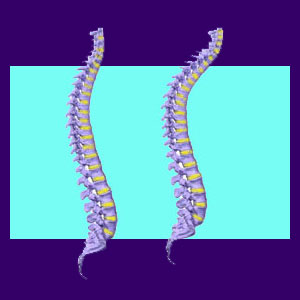
The human spine is multiply curved to help distribute weight and force across larger areas of the body. These curves make us far more capable of athletic activities and help to insulate us from harm.
The spine is broken up into 5 primary regions; starting from the top: the cervical spine, the thoracic spine, the lumbar spine, the sacral spine and the coccyx.
The normal degenerative processes which act upon all our organic tissues also affect the spine. It is normal to lose disc height and mass as we age, as well as develop bone spurs, also known as osteophytes, on the vertebral bones. Spinal degeneration is the reason why people seem to shrink as they age. We actually lose a considerable portion of our height from the decrease in collective intervertebral disc height.
Spinal Considerations
The term backbone has taken on the meaning to describe any person, place or thing which supports and provides structure. Our spine is much maligned by modern medical science, but this vilification is mostly unjustified. The spine is a true wonder of design and certainly has not brought us this far as a species without becoming the best skeletal support in nature.
Doctors have chosen to make the spinal structures scapegoats for a wide range of dorsopathy conditions, when in fact, chronic back pain is seldom structurally-induced.
To understand more about how the spine is implicated unfairly in many painful syndromes, consider learning more about knowledge therapy and you will truly understand why back pain is so poorly managed in our healthcare system.