
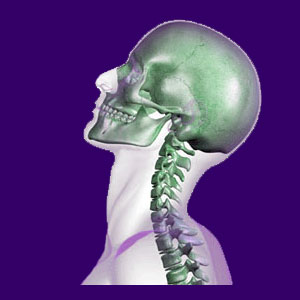
Slipped vertebrae is another common term for spondylolisthesis. In this condition, one or more vertebrae move frontwards or rearwards, out of alignment with the remainder of the spinal bones. Vertebral migration most commonly occurs in the lower lumbar region, but can actually occur anywhere in the spine and is sometimes found to severe degrees in the cervical region.
Vertebral slippage should never be confused with a slipped disc, since this is a completely different and unrelated diagnosis.
This essay clarifies the diagnosis of a displaced vertebral bone in the spine.
Causes of Slipped Vertebrae
Spondylolisthesis can occur due to congenital condition, early developmental condition, degenerative process or back injury.
Typical cases are usually congenital or early developmental varieties, with the condition making its appearance between the years of birth to age 16. Most of these spondylolysis conditions start before the age of 6.
Degenerative spondylolisthesis conditions begin later in life as a result of advanced spinal arthritic processes.
Vertebral slippage due to injury is rare, but can be rather serious. Trauma-induced spondylolisthesis conditions can create severe health problems and spinal instability in some patients. Obviously, these types of vertebral slippage are often the most symptomatic of all the common varieties.
Medical research shows little, if any correlation between the incidence of chronic lower back ache and the existence of grade 1 or 2 spondylolisthesis diagnoses. There is a considerable correlation demonstrated when the vertebral displacement is rated as grade 3 or 4.

Treatments for Misaligned Vertebrae
Most congenital and developmental conditions do not require any medical treatment, but should be monitored by a doctor. Some moderate to severe cases may require conservative therapies and a few advanced cases of vertebral slippage might require surgical intervention, most commonly in the form of a spinal fusion procedure.
Degenerative spondylolisthesis treatment also depends greatly on the actual amount of slippage which has occurred. Most cases do not require any special treatment, although these cases should also be monitored by a qualified physician. Extreme cases of degenerative spondylolisthesis might require aggressive or even surgical treatment. Slipped vertebrae due to injury almost always require some form of operation to reconstruct the spine.
It is important to realize that the necessity for treatment depends upon a common factor, regardless of the cause of the spondylolisthesis condition. The percentage of vertebral slippage is this most important factor. Minor slippage is rated at less than 25%. Moderate slippage is rated at 26% to 50% misalignment. Serious slippage is rated at 51% to 75% misalignment. Extreme misalignment is rated at 76% to over 100% slippage. The greater the percentage of vertebral misalignment is, the greater the chance of the patient displaying an unstable spinal column.
Slipped Vertebrae Conclusions
Although spondylolisthesis sounds like a very scary condition, it is usually completely harmless and asymptomatic in the less serious expressions. The vast majority of patients have minor spondylolisthesis which will not interfere with any physical function in their lives.

The only real danger of this common form of the condition is the diagnostic nocebo effect commonly imparted when the condition is discovered. The fear associated with this condition can create the start of a psychogenic back pain syndrome in some patients.
Severe vertebral slippage conditions can definitely be painful and even debilitating. In these cases, it is crucial to learn about all the possible back pain treatment options from a specialist in spondylolisthesis care. I recommend having a neurologist head up your treatment team, as these doctors are known to provide the best curative results.